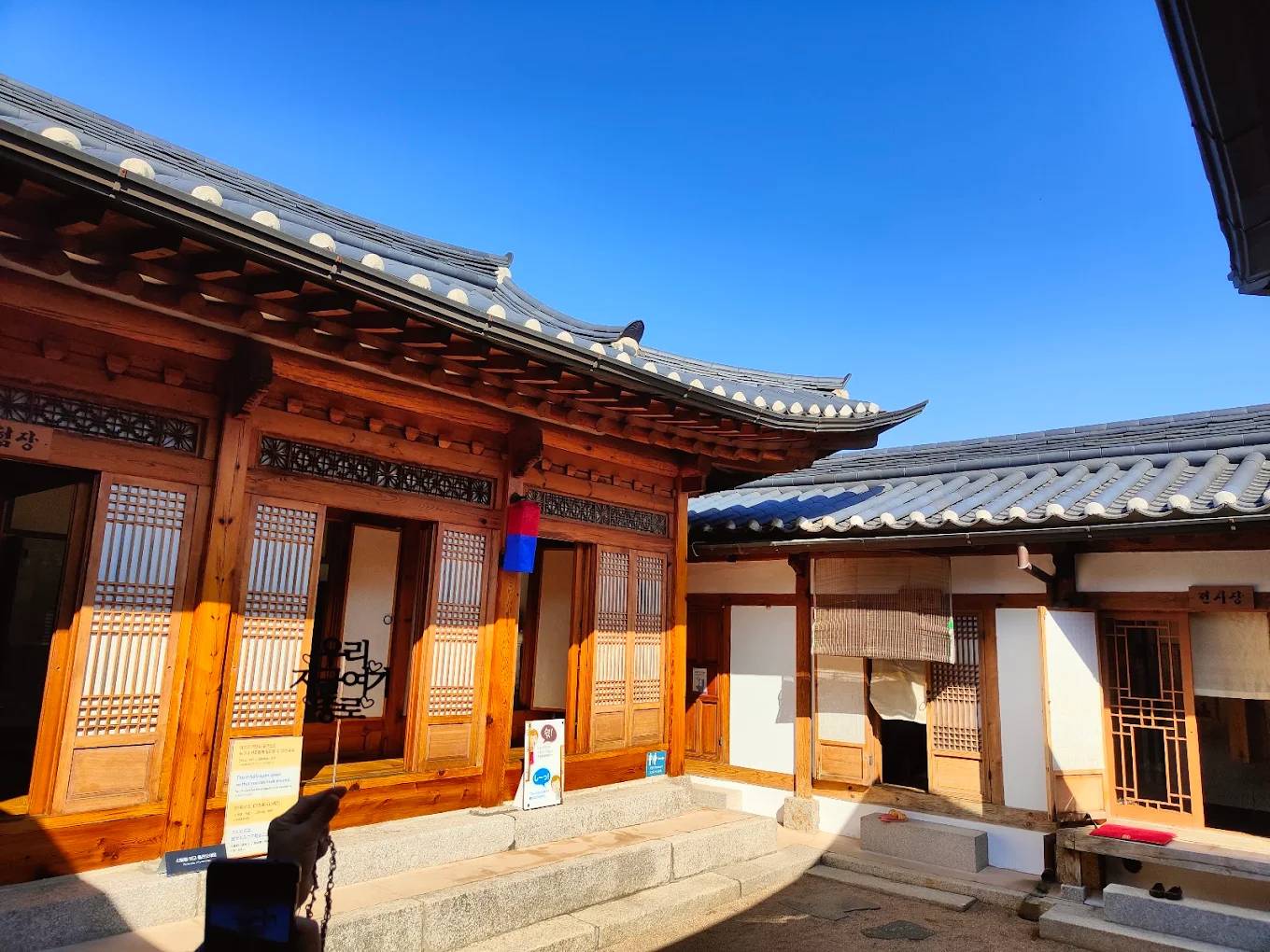
While tourists crowd Bukchon, locals slip west of Gyeongbokgung to Seochon (서촌) — a quieter, lived-in neighborhood of winding hanok alleys, artist studios, indie bookshops, traditional eateries, and the famous Tongin Market with its coin-lunchbox experience. It's the place to feel old Seoul without the crowds, all steps from the city's grandest palace.
This is the complete 2026 guide.
Quick Facts
- What: A historic hanok neighborhood of alleys, markets, cafés, and galleries
- Where: Jongno-gu, west of Gyeongbokgung Palace, Seoul
- Best for: Authentic atmosphere, traditional food, cafés, slow walks
- Hours: Neighborhood always open; shops/market ~daytime to evening
- Nearest station: Gyeongbokgung Station (Line 3), Exit 2 — a few minutes' walk
- Time to spend: 2–4 hours
Why Visit
Seochon (literally "west village") is Bukchon's lower-key sibling — a real, residential warren of hanok houses, mom-and-pop restaurants, and creative spaces where Korean artists and writers have long lived (the poet Yun Dong-ju and painter Lee Jung-seop among them). There's no single big sight; the joy is wandering the alleys, eating well, browsing indie shops, and soaking up an unpolished, authentic side of historic Seoul, with Gyeongbokgung and Tosokchon Samgyetang right at its edge.
How to Get There
- Take Line 3 to Gyeongbokgung Station, Exit 2.
- Walk west into the Seochon alleys (Sajik-ro / Jahamun-ro area).
- It's an easy add-on after Gyeongbokgung Palace.
What to See & Do
Tongin Market & the Coin Lunchbox (Dosirak)
Seochon's star attraction: buy brass coins (yeopjeon) at the info counter, then "shop" the market stalls — fill your traditional lunchbox (dosirak) with tteokbokki, jeon, and banchan using the coins. A fun, delicious, hands-on experience.
Hanok Alleys
Wander the narrow lanes of traditional tile-roofed houses — atmospheric, photogenic, and refreshingly local.
Indie Bookshops, Galleries & Cafés
Seochon is full of independent bookstores, small galleries, ateliers, and characterful cafés tucked into hanok and old buildings.
Literary & Art Heritage
Sites linked to beloved Korean artists and writers (e.g., memorials and themed spots) dot the neighborhood — a cultural layer beneath the cafés.
Suseong-dong Valley
A small scenic valley at the edge of the neighborhood, beneath Inwangsan — a peaceful nature pocket once painted by Joseon artists.
When to Visit
- Daytime to early evening: Markets, shops, and cafés are open.
- Lunchtime: For the Tongin Market coin-lunchbox experience.
- Spring & autumn: The alleys and Suseong-dong valley are loveliest.
- Weekdays: Quieter and more local.
A Suggested Plan
10:00 AM — Gyeongbokgung Palace (guard ceremony). 11:30 AM — Walk into Seochon; wander the hanok alleys. 12:00 PM — Tongin Market coin-lunchbox lunch. 1:30 PM — Indie bookshops, galleries, and a café break. 3:00 PM — Stroll up to Suseong-dong valley or toward Inwangsan. 4:30 PM — Continue to Bukchon & Samcheong-dong for the evening.
What to Combine With
- Gyeongbokgung Palace — at the eastern edge of Seochon.
- Tosokchon Samgyetang — the famous ginseng-chicken-soup restaurant here.
- Inwangsan & the Seoul City Wall — scenic trail above the neighborhood.
- Bukchon Hanok Village & Samcheong-dong — across the palace, a short walk.
- Gwanghwamun Square — just south.
Tips From Repeat Visitors
- Do the Tongin Market coin lunchbox — it's the neighborhood's signature experience.
- Just wander — Seochon is about atmosphere, not a checklist.
- It's residential — keep noise down and respect homes in the alleys.
- Pair with Gyeongbokgung and Tosokchon for a perfect morning.
- Bring a little cash for the market coins and indie shops.
- Go on a weekday for the most local feel.
Seochon vs Bukchon
| Seochon | Bukchon | |
|---|---|---|
| Vibe | Lived-in, local, low-key | Polished, scenic, touristy |
| Highlight | Tongin Market, alleys | Hanok views, photo lanes |
| Crowds | Lighter | Heavy |
| Best for | Authentic atmosphere, food | Classic hanok photos |
Do both — they sit on opposite sides of Gyeongbokgung and complement each other.
Frequently Asked Questions
What is Seochon known for? Authentic hanok alleys, Tongin Market's coin-lunchbox experience, indie bookshops, cafés, and a local, artistic atmosphere.
Where is it? West of Gyeongbokgung Palace; Gyeongbokgung Station (Line 3), Exit 2.
What is the Tongin Market coin lunchbox? You buy brass coins, then use them to fill a traditional lunchbox with food from market stalls — a fun, hands-on meal.
How is it different from Bukchon? Seochon is quieter, more residential, and less touristy, while Bukchon is more polished and crowded.
How long should I spend there? About 2–4 hours, or combine it with Gyeongbokgung and Bukchon for a full day.
Is it good for food? Yes — Tongin Market, traditional eateries, and Tosokchon Samgyetang are all here.
Final Thoughts
Seochon is the soul of old Seoul without the crowds — hanok alleys to lose yourself in, a market where you eat with brass coins, and indie shops and cafés steeped in artistic history, all beside Gyeongbokgung. Wander slowly, fill a coin lunchbox at Tongin Market, and discover the city's most authentic historic neighborhood.