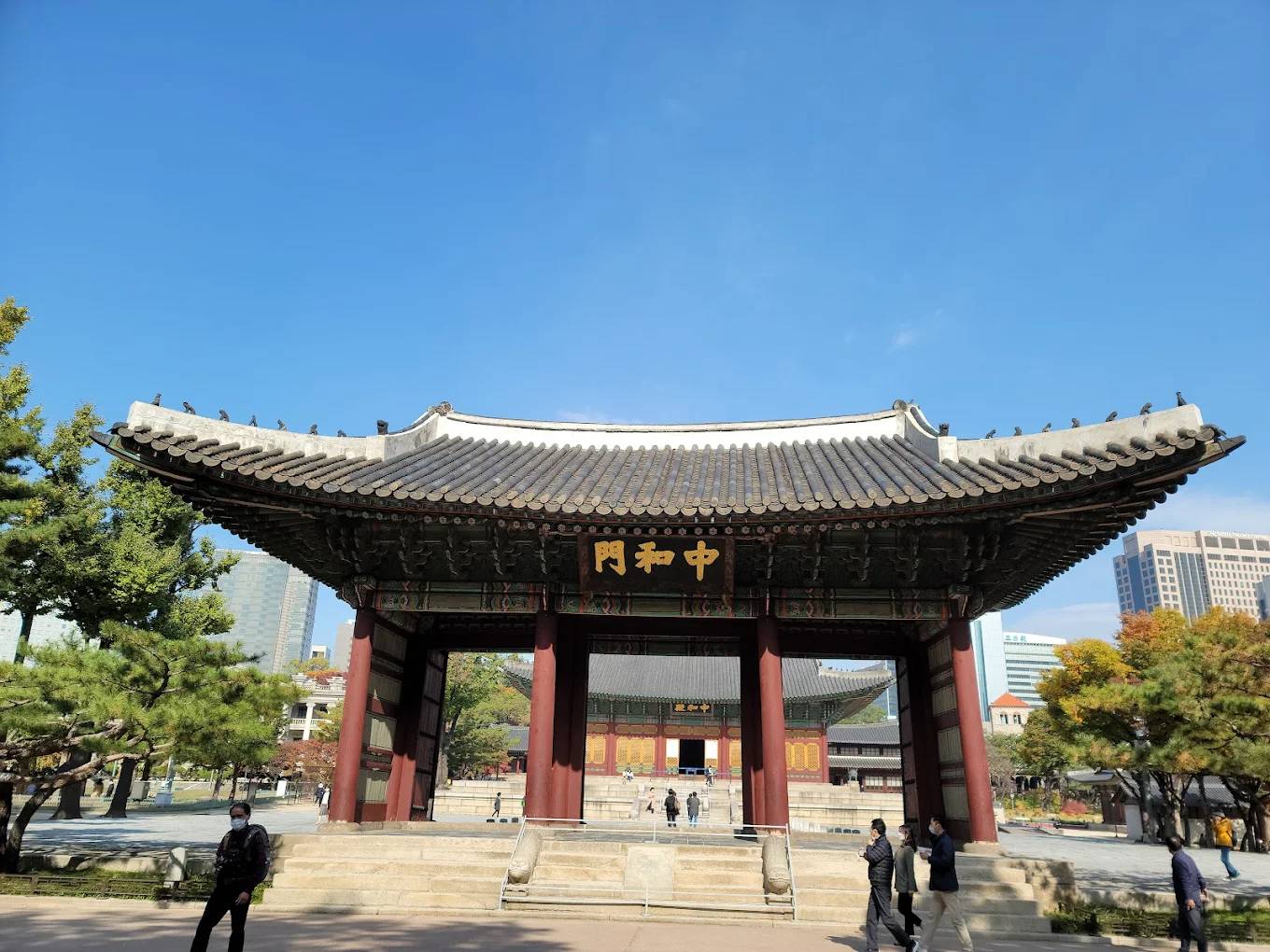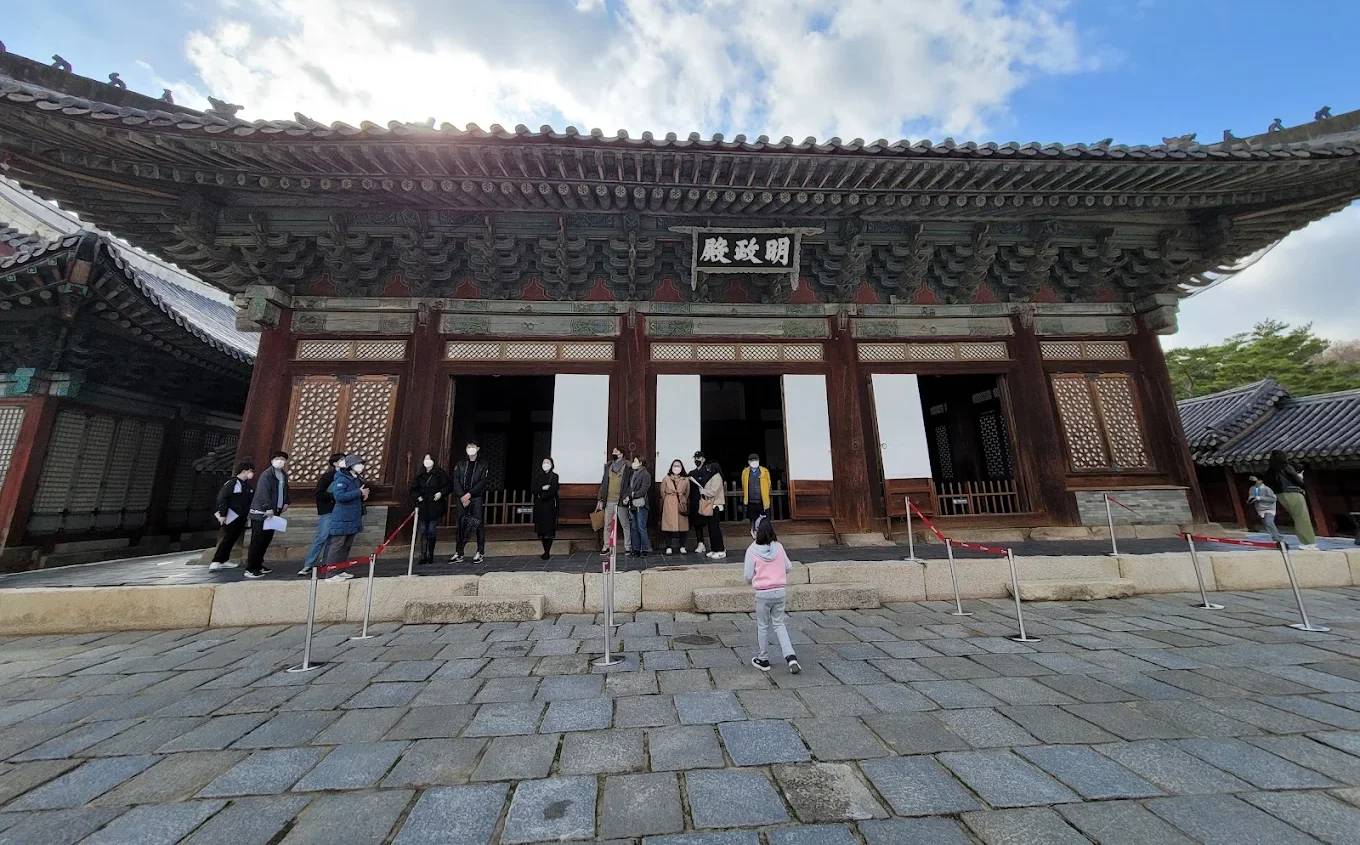
The largest and most magnificent of Seoul's five grand palaces, Gyeongbokgung (경복궁) is the symbolic heart of Korea — a sprawling royal complex of throne halls, pavilions, and gardens beneath Bugaksan Mountain, complete with a colorful changing-of-the-guard ceremony. First built in 1395, it's the essential first stop for any visitor to Seoul.
This is the complete 2026 guide.
Quick Facts
- What: The principal royal palace of the Joseon dynasty (built 1395)
- Where: Jongno-gu, central Seoul (Gwanghwamun area)
- Open: ~09:00 AM – 6:00 PM (last entry varies; later in summer); closed Tuesdays
- Admission: ~₩3,000 adult; free if wearing hanbok; combined palace ticket available
- Best for: History, the guard ceremony, hanbok photos, first-time visitors
- Nearest station: Gyeongbokgung (Line 3, Exit 5) or Gwanghwamun (Line 5)
Why Visit
Gyeongbokgung ("Palace of Shining Happiness") was the main royal residence and seat of government of the Joseon dynasty — and after destruction and painstaking restoration, it's once again Seoul's grandest historical site. Highlights include the majestic Geunjeongjeon throne hall, the picturesque Gyeonghoeru Pavilion on its lotus pond, and the Hyangwonjeong garden pavilion. The twice-daily changing-of-the-guard ceremony at the main gate adds color and pageantry. On the grounds you'll also find the National Folk Museum and the National Palace Museum. It's the perfect introduction to Korean history.
How to Get There
- Take Line 3 to Gyeongbokgung Station, Exit 5 — leads almost directly into the palace.
- Or Line 5 to Gwanghwamun Station and walk up through Gwanghwamun Square.
- It's a short walk from Bukchon, Insadong, and Samcheong-dong.
What to See
Gwanghwamun Gate & the Guard Ceremony
The grand main gate, where the Royal Guard Changing Ceremony takes place (typically twice daily — check times). Colorful costumes, weapons, and music.
Geunjeongjeon (Throne Hall)
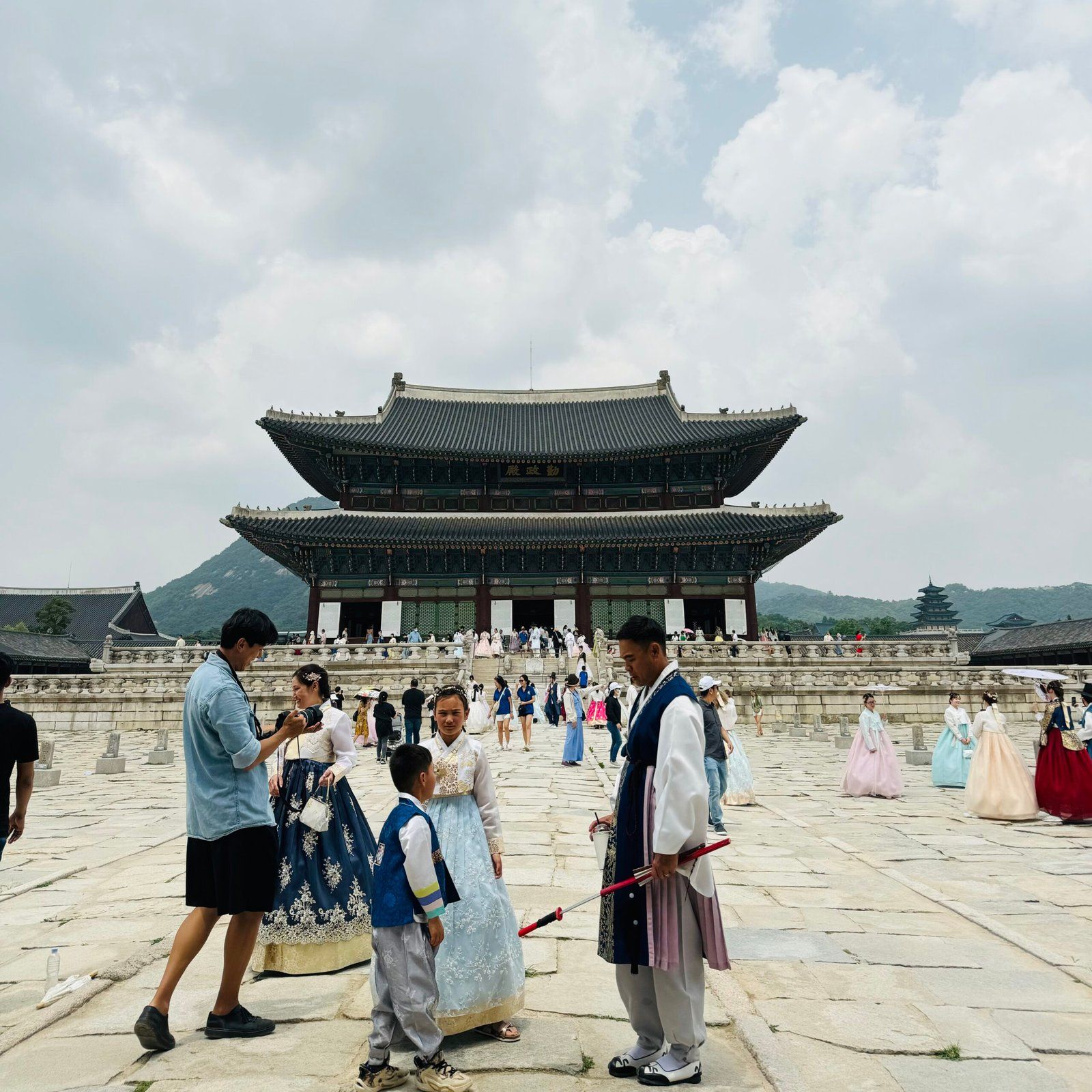
The palace's centerpiece — the imposing throne hall where kings held court, set on a wide stone courtyard with rank stones.
Gyeonghoeru Pavilion
A stunning banquet pavilion on a lotus pond, supported by 48 stone pillars — one of Korea's most iconic scenes, especially reflected in the water.
Hyangwonjeong Pavilion
A graceful hexagonal garden pavilion on a small island — beautiful in every season.
The Museums
- National Folk Museum of Korea (on the grounds) — Korean traditional life.
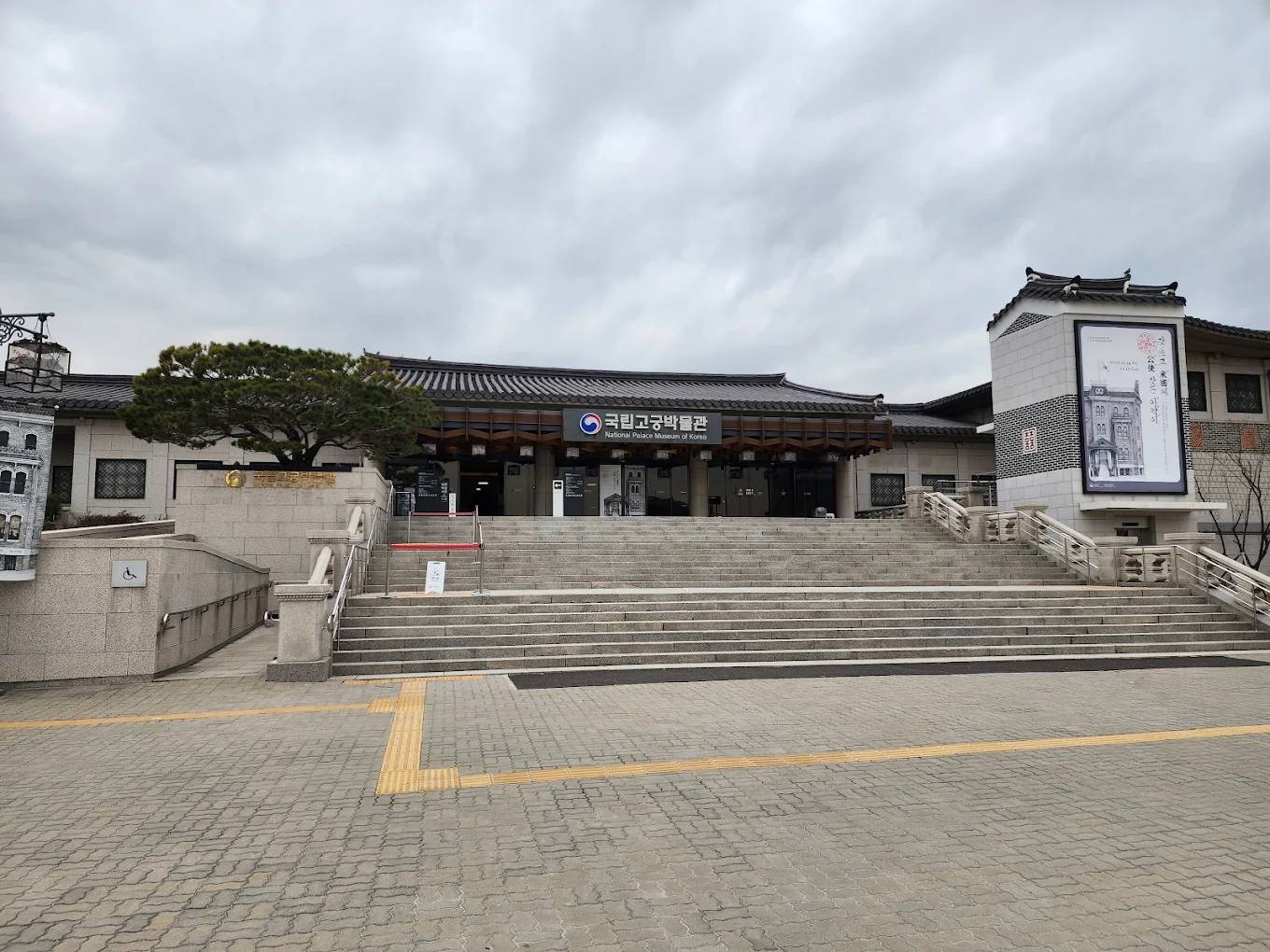
- National Palace Museum of Korea (near the entrance) — royal artifacts.
When to Visit
- Morning: Beat crowds and catch the first guard ceremony.
- Spring & autumn: Blossoms and foliage make the grounds gorgeous.
- Wear hanbok: Free entry and beautiful photos — rental shops are nearby.
- Closed Tuesdays: Plan around it.
- Evening openings: Special night-viewing events run seasonally (book ahead).
A Suggested Plan
9:00 AM — Gyeongbokgung Station, Exit 5; enter the palace (rent hanbok nearby for free entry). 9:30 AM — Watch the guard ceremony at Gwanghwamun. 10:00 AM — Geunjeongjeon throne hall → Gyeonghoeru Pavilion → Hyangwonjeong. 11:30 AM — National Folk Museum on the grounds. 12:30 PM — Lunch in Seochon or Tongin Market. Afternoon — Bukchon Hanok Village, Samcheong-dong, and Changdeokgung.
What to Combine With
- Bukchon Hanok Village & Samcheong-dong — a short walk away.
- Changdeokgung & the Secret Garden — nearby UNESCO palace.
- Insadong — traditional culture street close by.
- Gwanghwamun Square — right out front.
- Cheong Wa Dae (Blue House) — behind the palace, now open to visitors.
- Tosokchon Samgyetang & Seochon — famous lunch nearby.
Tips From Repeat Visitors
- Wear hanbok — free entry plus the best photos (rent it near the palace).
- Time the guard ceremony — check the day's schedule (it doesn't run on closed days).
- Arrive early — it's Seoul's busiest palace.
- Buy the integrated palace ticket if seeing several palaces — great value.
- Closed Tuesdays — plan around it.
- Combine with Bukchon and Changdeokgung for the ultimate historic day.
- Join a free guided tour (offered in several languages) for context.
Gyeongbokgung vs Changdeokgung
| Gyeongbokgung | Changdeokgung | |
|---|---|---|
| Style | Grand, symmetrical, imperial | Harmonized with nature |
| Highlight | Throne hall + guard ceremony | Secret Garden (Huwon) |
| Crowds | High (busiest) | Moderate |
| UNESCO | No | Yes |
| Best for | First-timers, grandeur | Gardens, serenity |
See both if you can — Gyeongbokgung for grandeur and the ceremony, Changdeokgung for its Secret Garden.
Frequently Asked Questions
Is Gyeongbokgung worth visiting? Absolutely — it's Seoul's grandest palace and the essential first stop for understanding Korean history.
How much is admission? About ₩3,000 for adults, free if you wear hanbok; a combined palace ticket covers multiple palaces.
When is the guard ceremony? Typically twice daily at Gwanghwamun Gate — check the day's schedule (it doesn't run on Tuesdays when the palace is closed).
Is it closed any day? Yes — closed on Tuesdays.
How do I get there? Gyeongbokgung Station (Line 3), Exit 5, or Gwanghwamun Station (Line 5).
How long should I spend? About 1.5–2 hours for the palace, longer with the museums and nearby Bukchon.
Final Thoughts
Gyeongbokgung is the majestic heart of historic Seoul — grand throne halls, a pavilion mirrored in its lotus pond, colorful guard ceremonies, and royal museums, all beneath Bugaksan Mountain. Wear hanbok for free entry and photos, arrive early, time the ceremony, and pair it with Bukchon and Changdeokgung for the perfect introduction to Korea's royal past.