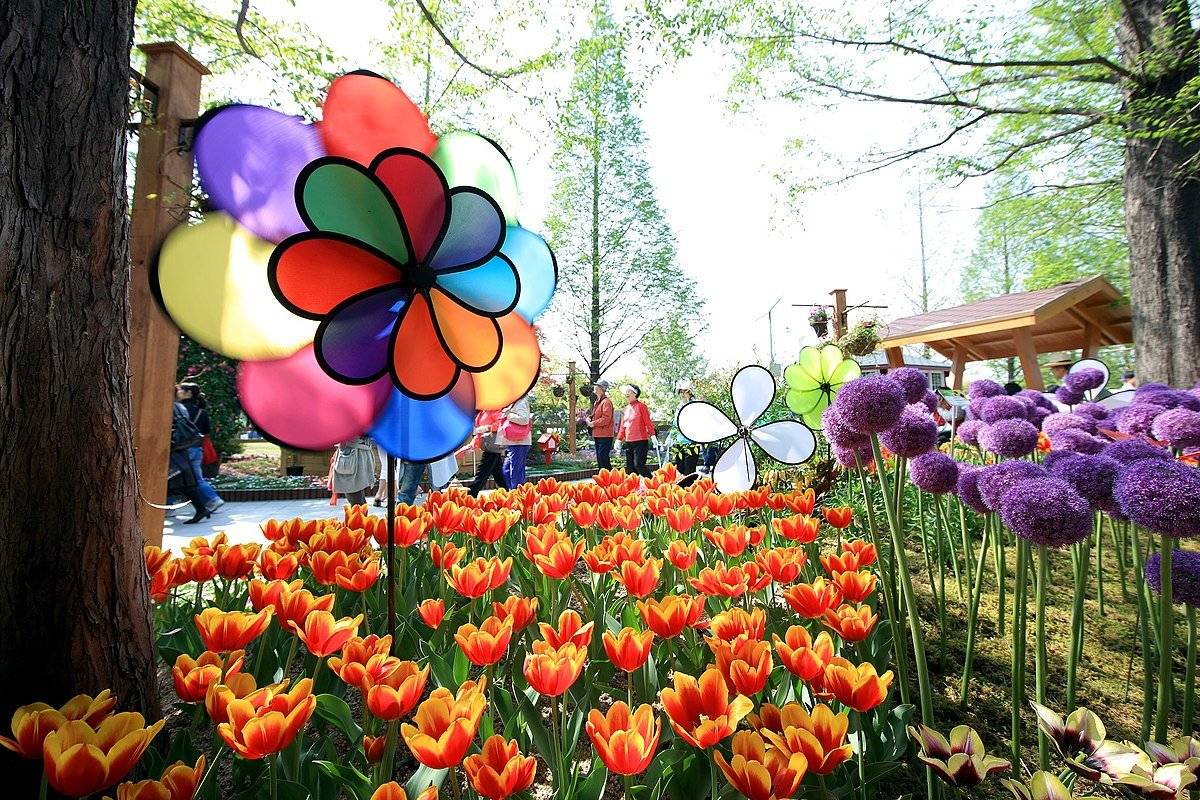
When cherry blossom season ends in mid-April, most travelers think Korea's flower season is over. They're wrong by exactly five weeks. From early to mid-May, Seoul transforms into a different kind of floral destination as rose festivals bloom across the city — long stretches of curated rose paths, dozens of colors, and small festival villages that draw families, photographers, and Korean wedding couples.
The headline event is the Seoul Rose Festival in Jungnang-gu, but several other neighborhoods host their own bloom periods worth visiting. This is the complete 2026 guide — when each peaks, where to go, and how to plan a perfect spring rose itinerary.
Quick Facts
- What: Multiple rose festivals across Seoul during May
- Headline: Seoul Rose Festival, Jungnangcheon Stream
- When: Late May (peak ~May 17–25, 2026)
- Cost: Free
- Best time: Early morning or late afternoon
- Season length: ~2 weeks of peak bloom
The Main Event: Seoul Rose Festival (Jungnangcheon)
The headline rose event is held along the Jungnangcheon Stream in northeastern Seoul. The festival features a 5.4 km curated rose path with 1+ million rose plants in over 200 varieties, festival booths, photo zones, and evening illumination.
Where: Jungnangcheon Stream, Jungnang-gu (between Sangbong and Junggok Stations) When: Late May (varies year to year — typically May 17–25) Hours: The path is open 24/7; festival booths run 10 AM – 9 PM during festival weekend Cost: Free
The path runs along both sides of the Jungnang stream and is divided into themed sections: white rose paths, color-mixed runs, themed wedding-photo zones, and a stretch dedicated to vintage Korean rose varieties.
Other Rose Spots in Seoul
Olympic Park Rose Plaza
The Rose Plaza at Olympic Park (Songpa-gu) is the city's most famous indoor-feeling rose garden. Nearly 26,000 rose bushes in over 200 varieties, arranged in formal beds with dedicated photo zones. Peak bloom: mid to late May.
Seoul Forest
Seoul Forest's rose garden runs in late May. Smaller scale than Jungnangcheon but more central and pairs beautifully with a Han River walk after.
Yangjae Citizens' Forest
In southern Seoul, Yangjae has both a rose garden and broader green parks. Less crowded than central spots and a good option if you're staying in Gangnam.
Hangang Parks (Yeouido, Banpo, Ttukseom)
Several of the Han River parks plant rose stretches that bloom in late May, often combined with peony beds and irises for a multi-flower experience.
Boramae Park
A neighborhood-scale rose collection with lower crowds and more local-family vibe. Easier for travelers staying in central Seoul to reach.
Best Time to Visit
By Date
The Korean rose bloom peaks roughly May 17–25 in Seoul. Check the Korea Tourism Organization website for the year's exact festival dates, which vary slightly.
By Time of Day
- Early morning (6–8 AM): Coolest temperatures, dewy roses, calmest crowds, best photo light.
- Late afternoon (5–7 PM): Golden-hour light, festival vendors active.
- Evening (after 8 PM): Some sections illuminated, especially along Jungnangcheon during festival weekend.
- Avoid: Saturday 11 AM – 4 PM, when crowds at Jungnang and Olympic Park peak.
How to Get to Seoul Rose Festival (Jungnangcheon)
Subway: Junggok Station on Line 7, Exit 2 — walk 5 minutes to the stream entry point. Or Sangbong Station on Line 7 / Gyeongchun, Exit 1.
Bus: Many local Seoul bus routes stop near "Jungnangcheon."
By taxi: ~₩15,000 from Hongdae, ~₩12,000 from Jongno.
The path itself is long (5.4 km) and you can join at any of several access points along the stream.
Sample 4-Hour Rose Festival Plan
4:00 PM — Arrive Junggok Station, Exit 2. 4:10 PM — Enter Jungnangcheon path. Walk southbound through the white-rose section. 4:45 PM — Photo stops at the themed rose archways. 5:30 PM — Pause at festival food booths for tteokbokki, hotteok, or coffee. 6:00 PM — Continue through colored-rose runs. 6:45 PM — Reach the central festival plaza for live music or performances. 7:30 PM — Sunset photo break. 8:00 PM — Walk back northbound as path lights begin to come on.
Combining With Other Late-May Spring Events
May is one of Seoul's best months. Pair the rose festival with:
- Lotus Lantern Festival (early May) — Buddha's Birthday celebrations with lantern parades.
- Itaewon Global Village Festival (late May) — international food and music in Itaewon.
- Jongmyo Daeje (early May) — UNESCO ritual ceremony at Jongmyo Shrine.
- Han River bike rides — peak season for river riding.
- Strawberry season tail end — markets still carry sweet strawberries through May.
A perfect "spring tail" Seoul itinerary: Rose festival → Han River bike ride → Itaewon Global Village dinner → Han River sunset.
Photography Tips for Rose Festivals
- Camera basics: A standard 35mm or 50mm lens compresses the path beautifully. A macro for close-ups of individual blooms.
- Light: Soft morning or late-afternoon light. Avoid harsh midday.
- Use a person in the frame. A subject in the path gives scale and storytelling.
- Get low. Most rose photos look better shot from rose-bush height, not above.
- Backlit shots glow. Shoot toward the sun (with the sun behind the roses) for petal-glow effect.
- Respect signage. Some sections rope off paths to protect plants — don't step beyond.
What to Bring
- Comfortable walking shoes — the Jungnangcheon path is 5.4 km if walked end-to-end.
- Water — limited fountains during peak afternoon.
- Sunscreen and hat — paths are mostly exposed.
- Light jacket for evening — late-May Seoul evenings can drop to 14–16°C.
- Camera with spare battery.
Tips From Repeat Visitors
- Weekday mornings beat weekend afternoons every time. Sunday mid-day is genuinely shoulder-to-shoulder.
- The northern section of Jungnangcheon is calmer than the central festival plaza.
- Bring a picnic. Several open-grass areas along the stream allow casual picnics. A 7-Eleven near Junggok Station has the basics (rice rolls, kimbap, beer, water).
- Dress photogenically. Many Korean visitors wear pastel or contrast colors specifically for photos. Worth packing one outfit if photography matters to your trip.
- Don't pick the roses. It's a real concern — the festival has signs about it.
- Check the bloom forecast. Cool springs delay bloom by a week; warm springs accelerate. Korea Tourism Organization posts updated forecasts in May.
Seoul Rose Festival vs Korea's Other Flower Festivals
- Cherry Blossoms (April): Whiter, shorter season, more famous, more crowded.
- Roses (Late May): More color variety, longer season, generally less crowded.
- Hydrangeas (June): Concentrated at Jeju and Pocheon Herb Island.
- Lotuses (July): Best at Semiwon Garden and Bukhansan area.
- Royal Azaleas (April): Best at Garden of Morning Calm.
- Pampas Grass (Sept–Oct): Haneul Park is the iconic spot.
If you're in Korea in late May, the rose festival is the flower event. Cherry blossoms are over, summer flowers haven't started, and roses bloom at peak.
Frequently Asked Questions
Is the Seoul Rose Festival free? Yes — the path and all viewing areas are free. Some optional festival activities (rose perfume making, photo studios) charge separately.
How long is the path? The full Jungnangcheon rose path is about 5.4 km. Most visitors walk 1–2 km of it.
Best month for roses in Seoul? Mid-to-late May. Some early varieties bloom in late April.
Are pets allowed? Yes on the public path. On-leash required.
Is it accessible? Yes — the Jungnangcheon path is paved and flat. Wheelchair and stroller friendly.
Are there food options on-site? Yes during festival weekend — Korean street food, snacks, coffee. Outside the festival days, bring your own or leave the path for the restaurants near Junggok Station.
Can I take wedding photos? The path is a popular wedding photo location. Most photographers do this without special permission.
Final Thoughts
The Seoul Rose Festival is the flower event most international tourists miss — and the one Korean locals quietly look forward to all spring. Walk the Jungnangcheon path on a weekday morning at peak bloom, and you'll understand why. Pink, white, red, yellow, and the rare blue-violet varieties run for kilometers along a calm city stream, with virtually no foreign tourists to crowd the frame.
Pair with a Han River sunset, a late dinner in Sangbong, and you have one of the best free spring afternoons Seoul offers.