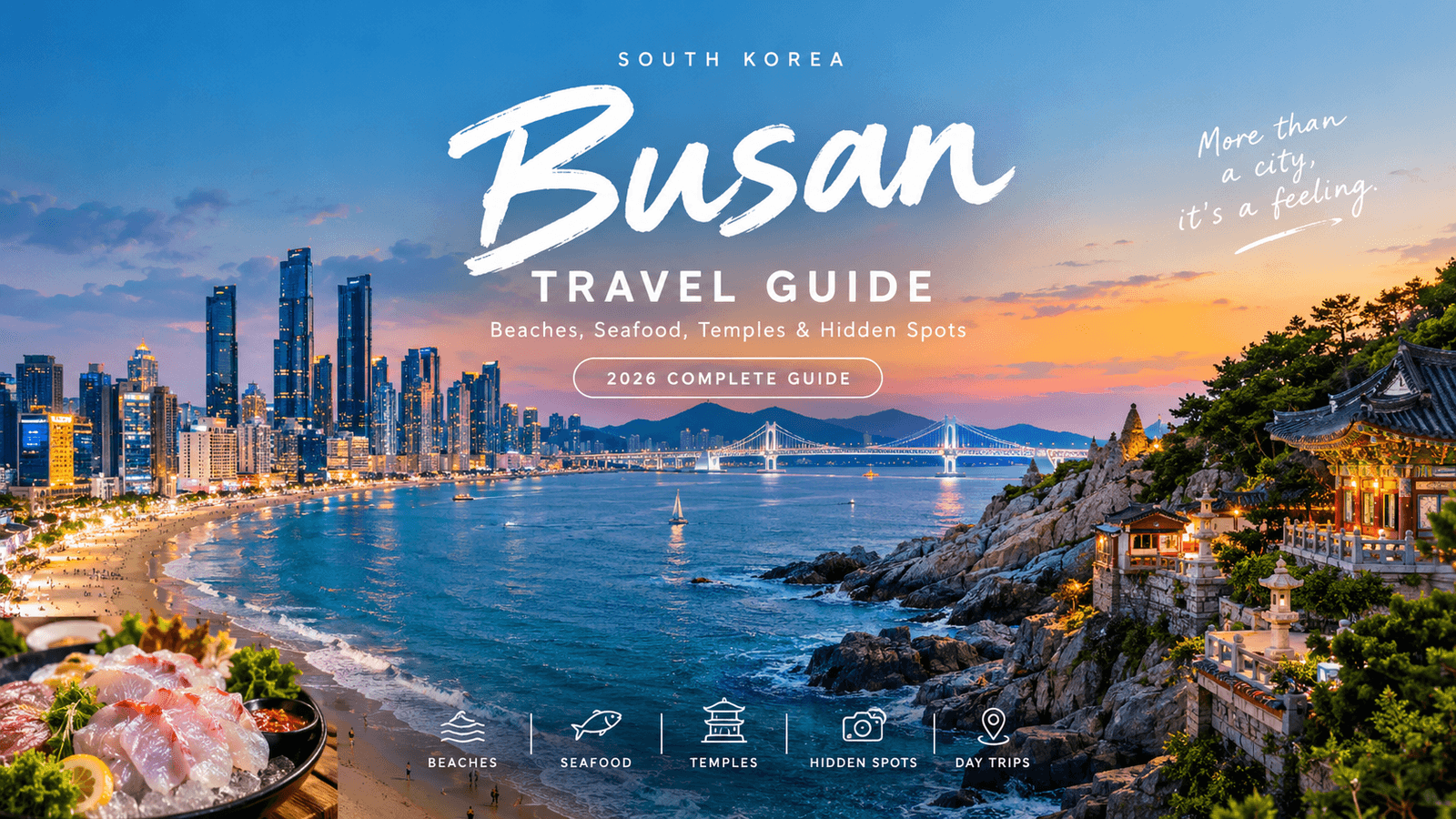
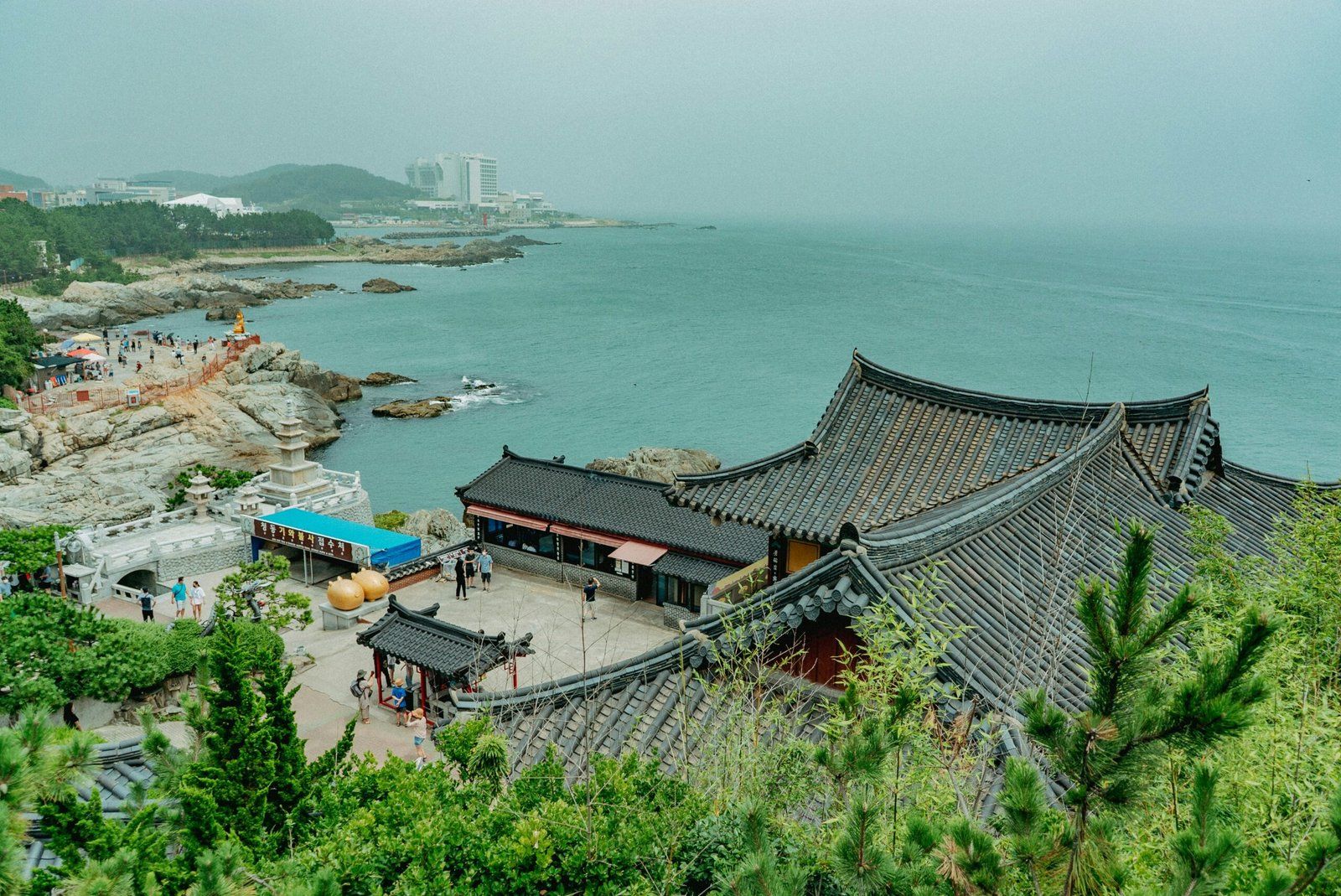
Most Korean temples are tucked deep in the mountains. Haedong Yonggungsa (해동 용궁사) is the rare exception — a 14th-century Buddhist temple built directly onto the rocky coast of Busan, where the prayer halls sit just meters above crashing waves. At sunrise, with the sea mist rising and the gold Buddha catching the first light, it's one of the most photographed places in all of Korea.
This is the complete 2026 guide: how to get there, when to go, what to see, and how to combine it with the rest of eastern Busan.
Quick Facts
- What: A seaside Buddhist temple founded in 1376, rebuilt in the 1930s
- Where: Gijang-gun, on Busan's northeast coast (near Songjeong Beach)
- Open: Roughly sunrise to sunset (typically ~05:00–sunset; gates close around 7:30–8:00 PM in summer)
- Admission: Free
- Time to spend: 1.5–2.5 hours
- Best for: Sunrise photography, coastal scenery, first-time Busan visitors
- Cost to get there: ~₩1,500 by bus from Haeundae
Why It's Special
Unlike Korea's famous mountain temples (Bulguksa, Beomeosa, Haeinsa), Yonggungsa is a water-and-sun temple — its full name means "Korea East Sea Dragon Palace Temple." The legend says that prayers offered here, beside the open ocean, are especially likely to be answered. Whether or not you're spiritual, the combination of traditional Korean architecture, dramatic black rocks, and the East Sea makes it unforgettable.
How to Get to Haedong Yonggungsa
The temple is in Gijang, about 20–30 minutes northeast of Haeundae. There is no subway station at the temple — you'll finish the trip by bus, taxi, or on foot.
Option 1: Bus 181 (Cheapest & Easiest)
- Take Busan Metro Line 2 to Haeundae Station (Exit 7) or Jangsan Station.
- Catch Bus 181 toward Gijang and get off at the Yonggungsa stop (용궁사·국립수산과학원).
- From the bus stop it's a 5–10 minute walk downhill, past a row of street-food stalls, to the temple gate.
- Fare: ~₩1,500 (T-money/Cashbee).
Option 2: Taxi
- From Haeundae: ~₩9,000–13,000, about 20 minutes.
- From central Busan (Seomyeon): ~25–35 minutes.
- Best if you're chasing sunrise before buses start running.
Option 3: City Tour Bus
Busan's red City Tour Bus stops here on the Haeundae route — convenient if you're hopping between coastal sights.
What to See
The Approach: 108 Steps
From the main gate you pass the zodiac statues, a row of stone lanterns, and then descend the 108 stone steps (representing the 108 earthly desires in Buddhism). The first glimpse of the temple framed against the sea is at the bottom of these steps — have your camera ready.
Daeungjeon Main Hall
The principal hall sits on the rocks facing the ocean. Behind and above it, the cliffs rise; in front, the waves break. On a clear morning the contrast of red-and-gold eaves against blue water is the classic shot.
The Golden Buddha & Seaside Shrines
- Haesu Gwaneum Daebul — a large gold-colored Goddess of Mercy statue overlooking the sea.
- Yaksayeorae Buddha (the "healing Buddha") — popular with visitors praying for good health.
- A small stone pagoda on the rocks where the spray reaches on rough days.
The "Money" and Wishing Spots
- Toss a coin into the bowls atop the small island stupa for luck.
- The academic success shrine is popular with students and parents before exams.
Seaside Walkways
Stone paths thread along the rocks, giving constantly changing angles of the temple, the sea, and the sunrise. This is where most of the best photos happen.
When to Visit
Best Time of Day
- Sunrise (the top pick): The temple faces east over the open sea, so the sun rises directly behind it. Arrive 20–30 minutes before sunrise. Quietest light, smallest crowds.
- Early morning (7–9 AM): Still calm, good light, far fewer tour groups.
- Midday/weekends: Very busy. Expect crowds on the 108 steps and the narrow seaside paths.
Best Time of Year
- New Year's Day (Jan 1): One of Korea's most famous first-sunrise spots — extremely crowded but atmospheric.
- Buddha's Birthday (May, lunar calendar): Thousands of pink lotus lanterns are strung across the entire temple. The single most beautiful time to visit.
- Spring & autumn: Mild weather, clear skies.
- Stormy/high-wave days: Dramatic spray and mist — spectacular, but some seaside paths may be roped off.
A Suggested Half-Day Plan
5:30 AM — Taxi from Haeundae (or first Bus 181) to arrive before sunrise. 6:00 AM — Down the 108 steps; sunrise over the main hall and seaside shrines. 7:00 AM — Explore the gold Buddha, pagodas, and rock walkways with soft morning light. 8:00 AM — Street-food breakfast (hotteok, fishcake, hodu-gwaja walnut cakes) at the stalls by the gate. 8:45 AM — Bus or taxi to Songjeong Beach (very close) or back toward Haeundae.
What to Combine With
Haedong Yonggungsa sits in a corner of Busan packed with great stops:
- Songjeong Beach — a calm, surf-friendly beach minutes away.
- Osiria / Lotte World Adventure Busan — theme park nearby.
- Ananti Cove — upscale seaside resort and bookstore-café complex.
- National Fisheries Science Museum — right by the bus stop.
- Haeundae Beach, Blueline Park & The Bay 101 — 20–30 minutes back toward the city.
- Gijang Market — famous for crab and seafood, a short drive north.
A great Busan east-coast day: Sunrise at Yonggungsa → breakfast at the gate → Songjeong Beach → lunch at Gijang Market → afternoon at Haeundae/Blueline Park.
Tips From Repeat Visitors
- Go at sunrise. It transforms the visit and you'll dodge the tour buses entirely.
- Wear grippy shoes. The rocks and stone steps get slick with sea spray.
- It's free — bring small coins for the wishing bowls and lanterns.
- The 108 steps are a climb back up. Pace yourself; there are rest spots.
- Buddha's Birthday lanterns are worth planning a trip around if your dates are flexible.
- Respect it as an active temple. Keep voices low near the prayer halls and don't block worshippers for photos.
- Eat at the entrance stalls — the hotteok and seafood snacks are part of the experience.
Haedong Yonggungsa vs Beomeosa
Busan's two most famous temples offer opposite experiences:
| Haedong Yonggungsa | Beomeosa | |
|---|---|---|
| Setting | Oceanside cliffs | Mountain (Geumjeongsan) |
| Vibe | Dramatic, photogenic, busy | Serene, forested, historic |
| Founded | 1376 | 678 AD |
| Admission | Free | Free |
| Best for | Sunrise, photos | Quiet, hiking, history |
| Access | Bus 181 from Haeundae | Beomeosa Station (Line 1) + bus |
If you have one temple visit in Busan, choose Yonggungsa for the scenery. With two days, add Beomeosa for the peace.
Frequently Asked Questions
Is Haedong Yonggungsa worth visiting? Yes — it's one of Busan's signature sights and arguably Korea's most scenic temple, especially at sunrise.
How much does it cost? Admission is free.
What time does it open? Roughly sunrise to sunset; it generally opens very early (~5 AM) and closes around dusk. Hours can shift seasonally and on holidays.
How long do you need? Plan 1.5–2.5 hours, longer if you stop for street food.
Can you go for the New Year sunrise? Yes, it's one of Korea's most popular first-sunrise spots — arrive very early and expect big crowds.
Is it accessible for those with limited mobility? The 108 steps and uneven seaside rocks make it challenging; there are some upper viewpoints with easier access, but the lower temple involves stairs.
Can I combine it with Haeundae in one day? Easily — they're about 20–30 minutes apart by bus or taxi.
Final Thoughts
Haedong Yonggungsa is proof that you don't have to hike a mountain to find a breathtaking Korean temple. Come at sunrise, walk down the 108 steps as the sky turns gold over the East Sea, and you'll understand why this little dragon-palace temple on the rocks is one of Busan's most beloved places. Free, unforgettable, and just a short bus ride from Haeundae — it belongs on every Busan itinerary.