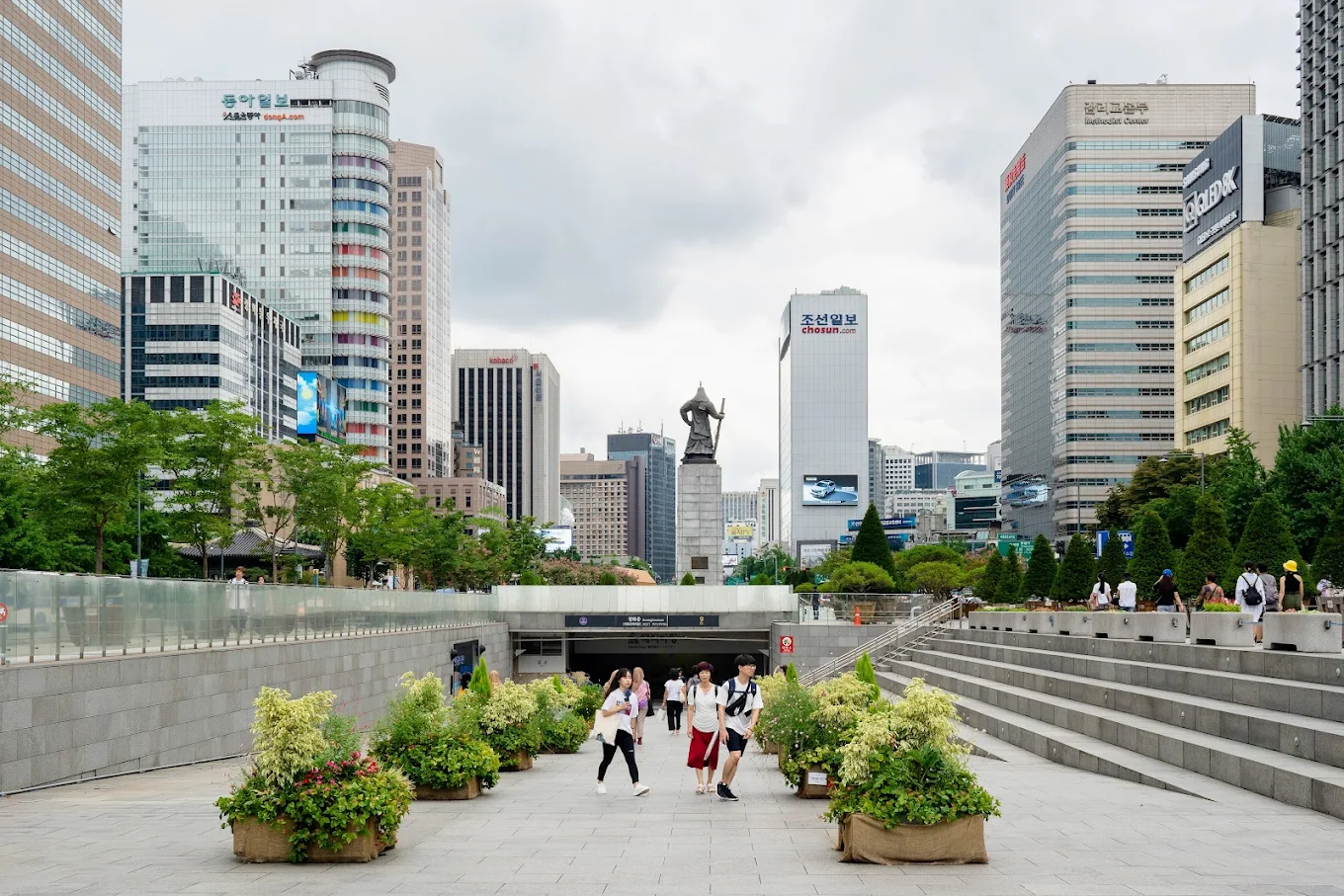
If Seoul has a single ceremonial center, it's Gwanghwamun Square (광화문광장). The wide pedestrian plaza stretches for half a kilometer between the imposing Gwanghwamun Gate (the main entrance to Gyeongbokgung Palace) and the central business district downtown. It's bordered on both sides by ministries, museums, and the headquarters of Seoul's biggest companies — and dominated at its center by two monumental statues that anchor the city's national identity.
This is the place Korean independence movements have marched. Where presidential candidates rally. Where families come on weekends to splash in the fountain channels. And where any Seoul trip should pause for at least 30 minutes to take it all in.
Here's the complete 2026 guide.
Quick Facts
- What: Seoul's largest pedestrian civic square
- Where: Jongno-gu, central Seoul, in front of Gyeongbokgung Palace
- Subway: Gwanghwamun Station (Line 5), Exit 9 — square is directly above
- Open: 24 hours, free
- Time to spend: 30–60 minutes (longer with palace combo)
What You'll See
King Sejong the Great Statue
A 9.5-meter bronze statue of King Sejong (1397–1450), the most revered king in Korean history and creator of Hangul (the Korean alphabet). The statue holds a copy of Hunminjeongeum — the document introducing Hangul — and is surrounded by symbolic objects representing his reign: a sundial, a celestial globe, and a rain gauge.
Admiral Yi Sun-sin Statue
At the southern end of the square stands the Admiral Yi Sun-sin statue, honoring Korea's greatest naval commander. Yi defeated the Japanese invasion fleet in the late 16th century with his "turtle ships" — armored, cannon-equipped ships now considered the world's first ironclad warships. The statue depicts Yi in armor, sword raised.
Underground Museums
Beneath the King Sejong statue, the Story of King Sejong & Yi Sun-sin Museum (free) provides an excellent introduction to both figures with multimedia exhibits in English.
Channel Fountains
Long, narrow water channels run through the square, popular with kids in summer. The water is shallow and inviting — many Korean families bring children to splash in the channels on hot days.
Historic Plinths and Monuments
Smaller monuments commemorate Korean independence movements, hangul history, and significant historical events — most with multilingual plaques.
Gwanghwamun Gate (Northern End)
The grand southern gate of Gyeongbokgung Palace, restored to its original 1395 design. Guards in traditional Joseon-era uniforms perform a ceremonial changing of the guard here multiple times daily.
When to Visit
By Time of Day
- Morning (8–10 AM): Calmest. Beautiful early light on the statues.
- Afternoon: Tourists peak. Best for the changing-of-the-guard ceremony at Gwanghwamun Gate.
- Sunset: Spectacular. The statues silhouetted against the western sky, with the palace gate lit at dusk.
- After dark: The fountains are illuminated, and the gate is dramatically lit. Atmospheric for evening walks.
By Season
- Spring (April–May): Cherry blossoms bloom in the surrounding alleys.
- Autumn (October–November): Best season — clear skies, perfect temperatures.
- Winter: Often hosts illumination festivals; Christmas decorations transform the square in December.
- Summer: Hot, but the fountains provide relief.
Changing of the Royal Guard
Performed at Gwanghwamun Gate (the northern end of the square), the changing-of-the-guard ceremony recreates Joseon-era royal traditions. Times vary slightly by season but generally:
- 10:00 AM
- 2:00 PM
- (Closed on Tuesdays — Gyeongbokgung's closure day)
The full ceremony lasts about 15–20 minutes, with traditional drums, banners, and ceremonial weapons. Free, no booking required, best viewed from the central plaza area.
How to Get There
Subway: Gwanghwamun Station on Line 5, Exit 9 brings you up directly into the square. Alternative: Gyeongbokgung Station (Line 3), Exit 5.
Walking: From Insadong: 8 minutes. From Cheonggyecheon Stream: 5 minutes. From Bukchon Hanok Village: 12 minutes.
Combine With Surrounding Attractions
Gwanghwamun is the geographic center of historic Seoul. Within a short walk:
- Gyeongbokgung Palace — directly through Gwanghwamun Gate
- National Folk Museum — in the palace grounds, free
- National Museum of Modern and Contemporary Art Seoul — 5 minute walk
- Cheonggyecheon Stream — 5 minute walk south
- Bukchon Hanok Village — 12 minute walk east
- Insadong — 8 minute walk
- Gwanghwamun bookstore (Kyobo Bookstore) — flagship Korean bookstore, beautiful interior
- Sejong Center for the Performing Arts — Korea's main concert hall
- Seochon Village — 10 minutes west
A perfect downtown morning: Gyeongbokgung Palace at opening (9 AM) → Changing of the guard (10 AM) → Gwanghwamun Square statues → Cheonggyecheon walk → Insadong lunch.
Cultural Significance
Gwanghwamun Square is more than a tourist stop — it's where modern Korea performs its civic identity. Major moments include:
- Candlelight protests (2016–2017): Millions gathered here in the protests that led to President Park Geun-hye's impeachment. The square became a global symbol of peaceful democratic action.
- World Cup celebrations: Tens of thousands fill the square during major Korean soccer tournaments.
- Independence Day (August 15) and other national holidays: Major ceremonies and rallies.
- Concerts and festivals: Sejong Center hosts events that spill into the square.
If your visit coincides with a national event, the square's energy is worth experiencing.
Photography Tips
- Best wide shot: From the southern end (Yi Sun-sin statue side) looking north toward the King Sejong statue and Gwanghwamun Gate, with Mount Bukhansan visible in the background.
- Best statue close-up: Late afternoon side-light on the King Sejong statue.
- Best Gwanghwamun Gate shot: From the southern plaza with the gate centered.
- Drone: Not permitted (central Seoul restrictions).
- Tripods: Allowed; respect public flow.
What to Eat Nearby
- Tosokchon Samgyetang — 10-minute walk west, Korea's most famous chicken-ginseng soup.
- Gwanghwamun Jip — historic pickled-pollack restaurant.
- Sejong Cafeteria — local-favorite cafeteria with Korean home-cooking sets.
- Kyobo Tower 1F restaurants — variety of mid-range Korean and international options.
- Itaewon Garbage Stew (해장국 places) — beloved hangover-cure soup spots in the alleys behind Gwanghwamun.
Tips From Repeat Visitors
- Combine with the underground museum. The Story of King Sejong & Yi Sun-sin Museum (free, beneath the King Sejong statue) is genuinely good and air-conditioned.
- Visit at sunset for photos. The statues silhouetted against Bukhansan Mountain are some of Seoul's best images.
- Bring a light jacket in spring/fall. The square is exposed; winds funnel through it.
- Check for events. Many weekends host markets, concerts, or cultural performances. Korea Tourism Organization website lists the schedule.
- Don't skip the Cheonggyecheon connection. A pedestrian path leads directly south from the square to the start of the restored Cheonggyecheon Stream — one of Seoul's best urban walking experiences.
Frequently Asked Questions
Is Gwanghwamun Square free? Yes — fully free, open 24/7.
How long should I plan? 30–60 minutes for the square itself. Add 2–3 hours for Gyeongbokgung Palace next door.
When's the changing of the guard ceremony? 10:00 AM and 2:00 PM at Gwanghwamun Gate, Tuesday–Sunday (closed Tuesday).
Are pets allowed? Yes, on-leash.
Is it accessible? Fully — flat plaza with ramps to underground museum.
Best time of year? Late October for clear skies and foliage backdrop.
Is it safe at night? Yes — Seoul is among the safest major cities, and central Gwanghwamun is well-lit and patrolled.
Final Thoughts
Gwanghwamun Square is the perfect place to feel the layered identity of Seoul — the Joseon king who created Hangul, the admiral who saved the country from invasion, the modern democratic protests that shaped the 21st-century nation, all centered in a single half-kilometer plaza with the most important palace gate in Korea at one end.
Take a slow walk from south to north, pause at each statue, watch the changing of the guard, and continue through Gwanghwamun Gate into Gyeongbokgung Palace. It might be the most concentrated cultural hour in Seoul.