Built for the 1988 Summer Olympics and now one of the largest urban parks in Korea, Olympic Park (올림픽공원) is Seoul's most underrated outdoor destination. The 1.5 million square-meter park combines walking and biking paths, a huge sculpture garden, lakes, fortresses from the 5th-century Baekje Dynasty, museums, and one of the city's most photographed solo trees ("the lonely tree" — a single oak on a sloping hill, beloved by Korean photographers).
It's free, vast, and easily worth a half-day for travelers wanting to step out of Seoul's high-density neighborhoods.
This is the complete 2026 guide to visiting Olympic Park.
Quick Facts
- What: 1.45 km² urban park, originally built for the 1988 Olympics
- Where: Songpa-gu, southeastern Seoul
- Subway: Olympic Park Station (Line 5 / Line 9), Exit 3
- Open: 24 hours, free
- Time to spend: 3–5 hours
What's Inside Olympic Park
The Lonely Tree (Hollow Tree, "외로운 나무")
Korea's most photographed individual tree. A single oak standing alone on a low grass hill — particularly stunning in autumn when the surrounding lawns turn golden. The walk to find it (10 minutes from the main entrance) and the photo wait time (yes, there's often a polite line) are part of the experience.
Mongchontoseong Fortress
The earthen ramparts of an ancient Baekje Dynasty fortress (5th century AD), now incorporated into the park. Walk the 2 km loop trail along the original earthworks for a quiet history walk with city views.
Seoul Olympic Museum of Art (SOMA)
A world-class modern art museum inside the park, with rotating exhibitions and a permanent collection focused on Korean and international contemporary art. Separate ticket required.
Sculpture Park
Over 200 large-scale outdoor sculptures by international artists scattered throughout the grounds. The largest sculpture park in Asia, free to walk through.
Olympic Stadium and Arena
The original 1988 Olympics venues remain largely intact. Tour them or just walk past for the architecture.
Mongchon Lake
A small lake with paddle boats in summer, lily pads, and weeping willows. A peaceful pause point.
Cherry Blossom Avenue
A long stretch of cherry trees that blooms in early April — a quieter alternative to Yeouido.
Rose Garden
Blooms in late May — a popular Seoul rose-viewing destination.
Olympic Plaza
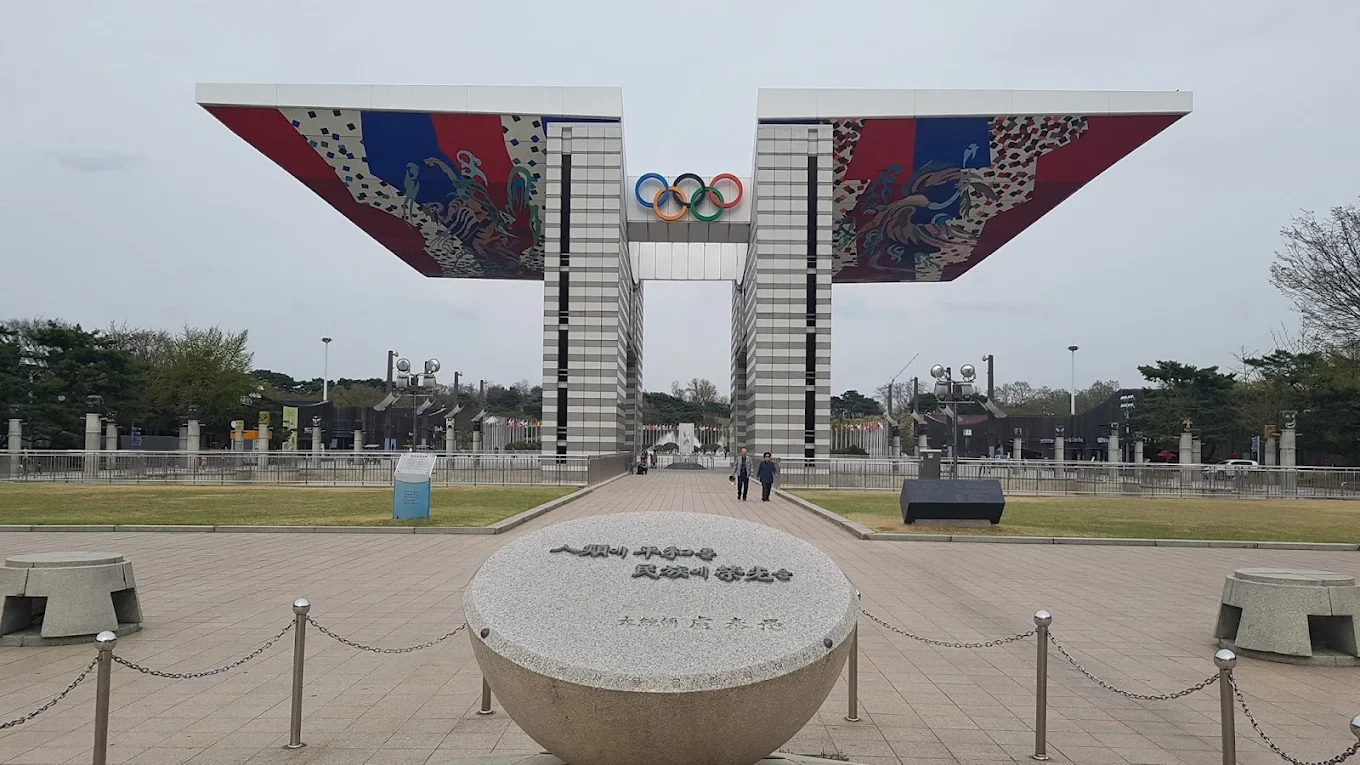
The main entrance plaza, with the iconic World Peace Gate sculpture.
Best Time to Visit
By Season
- Spring (April–May): Cherry blossoms (early April), then roses (late May) — both peak.
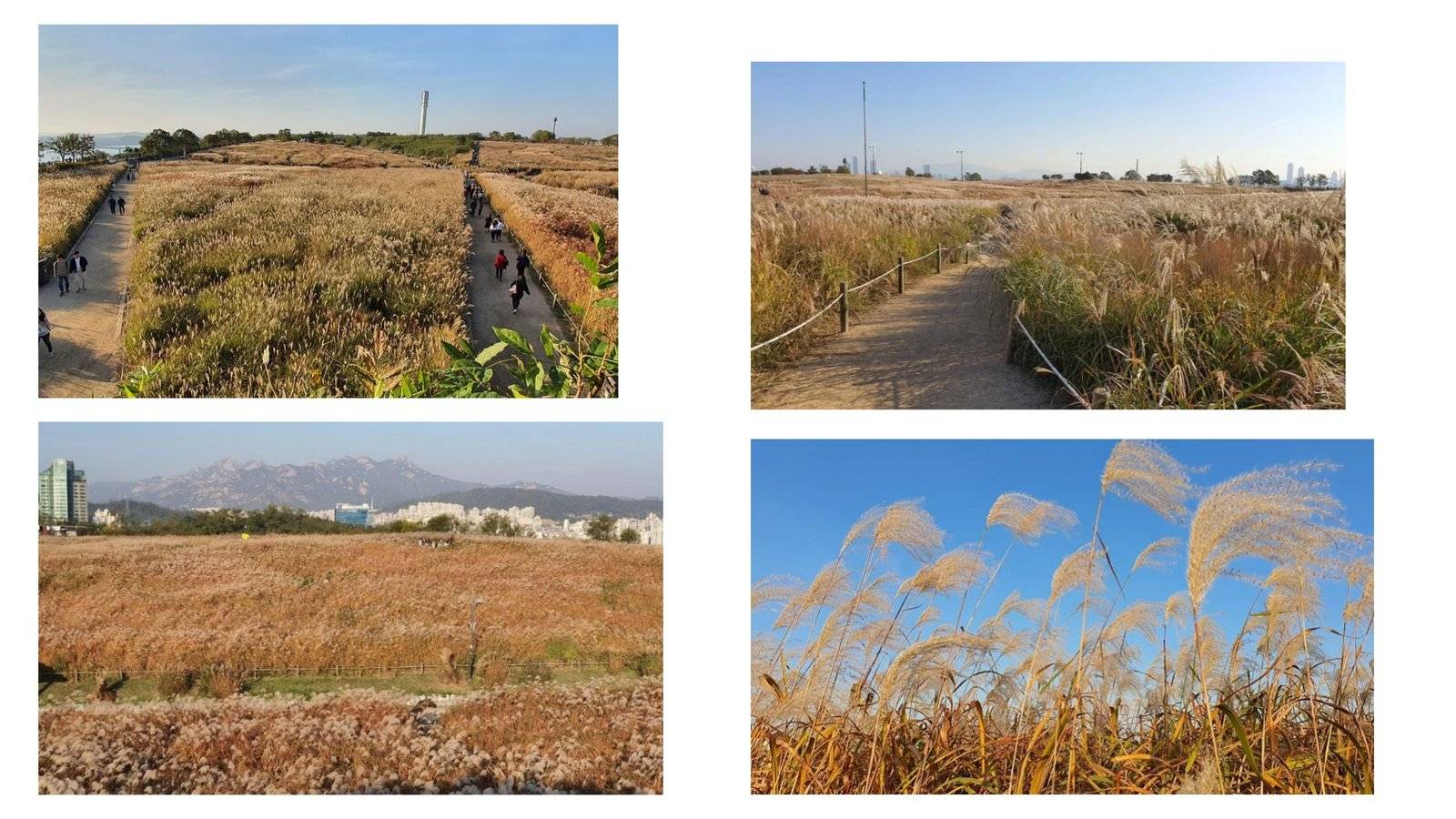
- Autumn (October–November): The Lonely Tree at peak fame, golden grass, perfect weather.
- Summer: Green and lush; bring sunscreen for exposed grass areas.
- Winter: Crisp and quiet. The fortress walks and sculpture gardens look striking.
By Time of Day
- Sunrise: Magical for the Lonely Tree photo.
- Morning: Calmest, fewest tourists.
- Late afternoon (4–6 PM): Best general visit, golden-hour light on sculptures.
- Sunset: Stunning if you stay near the lake.
How to Get There
Subway:
- Olympic Park Station (Line 5 / Line 9), Exit 3 — main entrance
- Mongchontoseong Station (Line 8), Exit 1 — back entrance, closer to the fortress
How to Spend a Half-Day
10:00 AM — Arrive at Olympic Park Station, Exit 3. 10:15 AM — Olympic Plaza & World Peace Gate. 10:30 AM — Walk to the Lonely Tree. Photo break. 11:30 AM — Mongchontoseong fortress walk. 12:30 PM — Lunch at the park café or Olympic Park Mall (across the street). 1:30 PM — Sculpture park walk. 3:00 PM — Coffee break at Mongchon Lake. 3:30 PM — Visit SOMA (Seoul Olympic Museum of Art). 5:00 PM — Sunset photo at the Lonely Tree.
What to Bring
- Comfortable walking shoes — the park is huge and you'll cover 5+ km.
- Picnic snacks and water — limited food options inside.
- Camera — golden-hour light on the sculpture garden is especially good.
- Layers — open spaces get windier than the city.
Tips From Repeat Visitors
- Visit the Lonely Tree at sunrise to avoid photo crowds.
- Bike rentals are available near several entrances — the best way to cover the park.
- Pack a picnic. A nearby GS25 or convenience store stocks everything; the park has plenty of shaded picnic spots.
- Don't underestimate the size. Plan to walk 5+ km if visiting multiple highlights.
- Check SOMA's exhibition schedule before visiting — programming rotates.
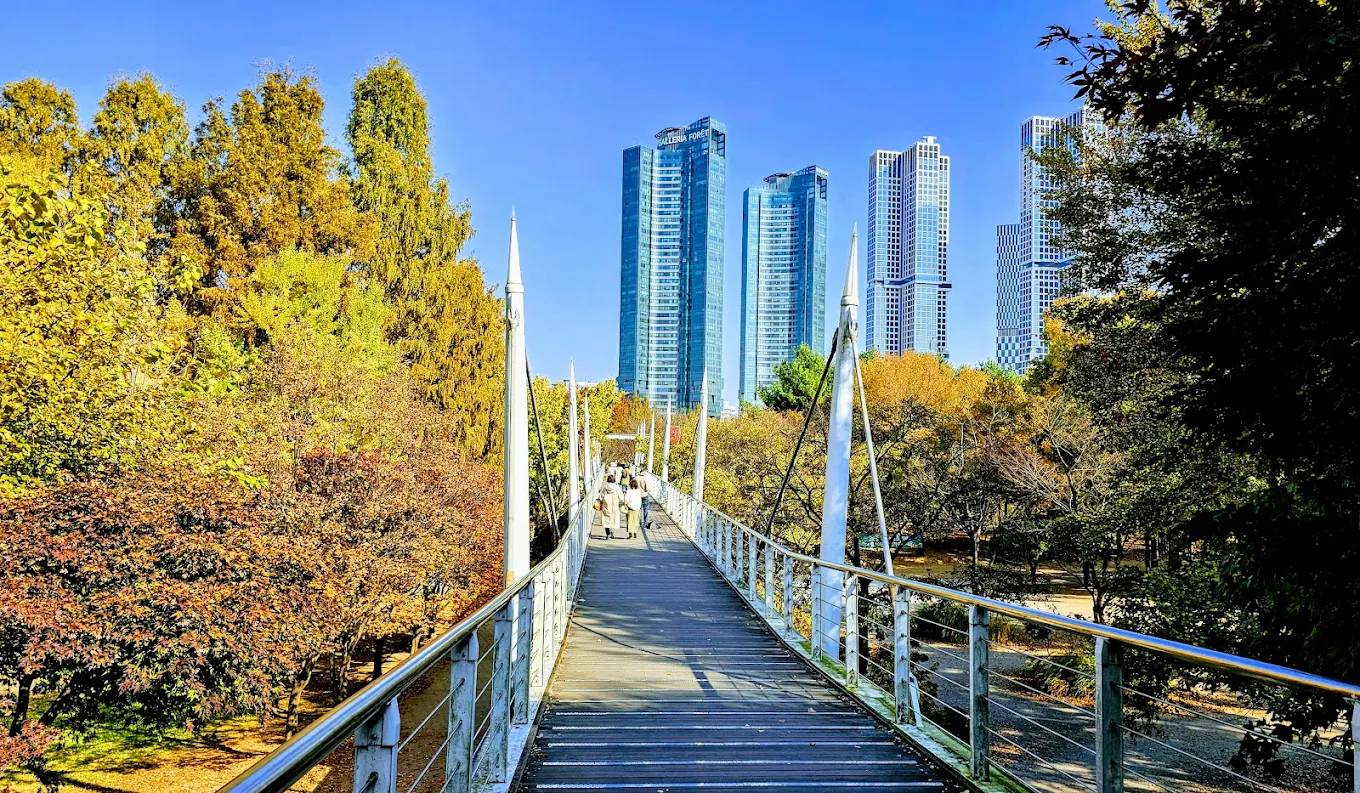
- Pair with Lotte World Tower — it's one subway stop away, easy to combine.
What to Combine With Olympic Park
- Lotte World Tower & Seoul Sky (1 stop away — the best half-day pairing)
- Lotte World Aquarium (in the same complex)
- Seokchon Lake (nearby, especially during cherry blossom season)
- Bongeunsa Temple (a few stops west)
- Starfield COEX Mall (close by)
A perfect Songpa-gu day: Olympic Park morning → Seokchon Lake afternoon (cherry blossom season) → Lotte World Tower sunset → Coex Mall evening.
Photography Highlights
- The Lonely Tree — sunrise or sunset for cinematic light.
- Sculpture garden — wide shots with multiple sculptures in frame.
- Mongchontoseong fortress — the earthwork curves photograph beautifully from above.
- Mongchon Lake — willows + reflections.
- Olympic Plaza — the World Peace Gate against blue sky.
Frequently Asked Questions
Is Olympic Park free? Yes — fully free. SOMA museum requires a separate ticket.
How much time do I need? 3–5 hours for a comfortable visit. Half a day if hitting all major sights.
Best season? Late October–early November for the Lonely Tree and golden grass; April for cherry blossoms.
Can I bike? Yes — bike rentals available, paved paths throughout.
Are pets allowed? Yes, on-leash.
Is it accessible? Yes — paved paths and ramps throughout. The fortress walk has some inclines.
Is there parking? Yes, paid parking lots at main entrances.
Best entrance for first-timers? Olympic Park Station Exit 3 → Olympic Plaza is the iconic entrance.
Final Thoughts
Olympic Park is the quietest and largest green escape in Seoul, packed with so much variety — modern art, ancient fortress walls, photo-famous trees, lakes, sculpture gardens — that it never feels repetitive. Pair it with Lotte World Tower for a full Songpa-gu day, or visit on a weekday morning for one of the most peaceful walks in the city.
Bring good shoes, allow plenty of time, and don't skip the Lonely Tree at sunrise.