Often called the "museum without walls," Gyeongju (경주) was the capital of Korea's Silla Kingdom for nearly 1,000 years (57 BCE – 935 CE). Today it's the most history-rich city in Korea — UNESCO temples, royal tombs, golden crowns, an ancient observatory, and one of the country's most photogenic palace pond at sunset.
This is the complete 2026 day-trip guide to Gyeongju from Seoul or Busan, including KTX timings, the perfect 8-hour itinerary, what to skip, and where to eat.
Quick Facts
- What: Korea's ancient Silla capital (57 BCE – 935 CE)
- UNESCO sites: Bulguksa Temple, Seokguram Grotto, Yangdong Folk Village, Gyeongju Historic Areas
- From Seoul: 2 hours by KTX (Seoul Station → Singyeongju Station)
- From Busan: 30 min by KTX (Busan Station → Singyeongju Station)
- Best season: Spring (April–May) and Autumn (October–November)
- Total time needed: Day trip = 8–10 hours; ideal = overnight (1–2 nights)
- Cost: ~₩100,000–150,000 round-trip from Seoul (KTX + entries + meals)
Why Gyeongju?
If Kyoto is Japan's spiritual heart, Gyeongju is Korea's. The Silla kingdom unified the Korean peninsula in 668 CE and Gyeongju became one of the most cosmopolitan cities of the medieval world — bigger than Constantinople at its peak.
Today the city is a UNESCO World Heritage cluster with 1,200-year-old temples, royal tombs you can walk inside, the oldest surviving observatory in Asia, and Korea's most photographed pond reflection.
How to Get to Gyeongju
From Seoul (most popular route)
- KTX from Seoul Station → Singyeongju Station — 2 hours, runs every 30–60 min
- Cost: ₩50,000–55,000 one-way (₩100,000 round-trip)
- Earliest train: ~5:30 AM
- Last return: ~10:30 PM
- Booking: Korail app or website (book 2–3 days ahead in spring/autumn)
From Busan (the easier base)
- KTX from Busan Station → Singyeongju — 30 min
- Cost: ₩11,000 one-way
- Bus from Busan Nopo Terminal — 1 hour, ₩4,800
From Singyeongju Station to the Historic Center
- Bus 700 runs from KTX station → Bulguksa Temple → city center (every 20 min, ₩1,500)
- Taxi: ~₩20,000 (15 min) to historic center
- Day-tour shuttle bus: Pre-bookable on Klook/Trazy with KTX bundle
The Perfect One-Day Itinerary (8–10 Hours)
8:00 AM — Depart Seoul (KTX from Seoul Station)
Pick up coffee + Hwangnam bread (the famous Gyeongju red bean cake) at the station.
10:00 AM — Arrive Singyeongju
Take Bus 700 or taxi → Bulguksa Temple (~30 min ride).
10:45 AM — Bulguksa Temple (불국사)
The crown jewel. UNESCO Buddhist temple from 774 AD. Walk through the Cheongun-gyo and Baegun-gyo bridges (National Treasures), the Dabotap and Seokgatap pagodas, and the Daeungjeon main hall.
- Time: 90 min
- Entry: ₩6,000 adult
12:30 PM — Seokguram Grotto (석굴암)
A 10-min taxi ride or 30-min walk uphill. UNESCO grotto with a 3.45m granite Buddha carved in the 8th century — considered the most exquisite Buddhist sculpture in East Asia.
- Time: 45 min
- Entry: ₩6,000 adult
1:30 PM — Lunch in Bulguksa Area
Try Gyeongju ssambap (rice wraps with 30+ side dishes) or kalguksu (handmade noodle soup).
2:30 PM — Daereungwon Tomb Complex (대릉원)
Royal Silla burial mounds — 23 grass-covered tombs you can walk among. Enter Cheonmachong to see how a Silla king was buried.
- Time: 60 min
- Entry: ₩3,000 adult
3:30 PM — Cheomseongdae Observatory (첨성대)
Asia's oldest standing astronomical observatory (7th century, 365 granite stones — one for each day of the year). Adjacent to Daereungwon, free to view.
- Time: 15 min
3:45 PM — Hwangnidan-gil (황리단길)
Korea's most charming hanok-cafe street. Walk between traditional houses transformed into trendy coffee shops, bakeries, and souvenir shops. The pastry shops sell Gyeongju Hwangnam bread (red bean stamped pancake).
- Time: 60 min
- Note: "Hwangnidan-gil" is a riff on Seoul's "Gyeongridan-gil" — a younger Korean cafe-street naming trend
5:00 PM — Donggung Palace & Wolji Pond (동궁과 월지)
Reserved for golden hour. The most photogenic spot in Gyeongju. Restored Silla palace pavilions reflect in still water as the sky turns pink. Stays lit until 10 PM.
- Time: 90 min
- Entry: ₩3,000 adult
- Best photo: From the western shore, ~1 hour after sunset (blue hour)
6:30 PM — Dinner Near Wolji
Gyeongju jjajangmyeon, kalguksu, or ssambap at restaurants 5 min walk from the pond.
7:30 PM — Wolji Night Lights
Return to Wolji for night-illuminated palace + reflection.
8:30 PM — Taxi back to Singyeongju Station
9:00 PM — KTX back to Seoul (~11 PM arrival)
Top 10 Things to See in Gyeongju
1. Bulguksa Temple (불국사)
The most beautiful Buddhist temple in Korea. UNESCO. Built 774 AD.
2. Seokguram Grotto (석굴암)
3.45m granite Buddha carved into a hilltop grotto. UNESCO. The pinnacle of Korean Buddhist art.
3. Donggung Palace & Wolji Pond (동궁과 월지)
The reflection at sunset. Korea's most photographed historical scene. Lit at night.
4. Daereungwon Tomb Complex (대릉원)
23 grass-covered royal tombs. Enter Cheonmachong to see Silla treasures in situ.
5. Cheomseongdae Observatory (첨성대)
Asia's oldest astronomical observatory, 7th century, 365 granite stones.
6. Gyeongju National Museum
World-class artifacts including the Silla Gold Crown (National Treasure 191) and the Emille Bell.
- Entry: Free
- Note: If you skip the museum during your day trip, plan for an overnight return
7. Hwangnidan-gil (황리단길)
The hanok-cafe walking street. Younger, photogenic, food-focused.
8. Anapji Pond (안압지)
Same as Wolji Pond — older name. Sunset reflection.
9. Yangdong Folk Village (양동마을)
UNESCO Joseon-era village 30 min from city center. Skip on day trips; visit on overnight.
10. Royal Tomb of King Munmu (Underwater)
The world's only underwater royal tomb — Munmu the Great. Skip unless overnighting.
Suggested Day Trip Plans
Plan A — UNESCO + Sunset (Standard)
The 8 AM – 9 PM itinerary above.
Plan B — Night-Focused Photographer's Day
- 2 PM KTX from Seoul
- 4 PM: Daereungwon + Cheomseongdae
- 5:30 PM: Wolji golden hour
- 7 PM: Dinner
- 8 PM: Wolji at full night illumination
- 9:30 PM: KTX back to Seoul
Plan C — Two-Day Deep Dive (Recommended)
- Day 1: Bulguksa, Seokguram, Hwangnidan-gil, Wolji at night
- Day 2: Yangdong Folk Village, Gyeongju National Museum, royal tombs at sunrise
What to Eat in Gyeongju
Hwangnam Bread (황남빵)
The famous red-bean stamped pancake. Boxed for souvenirs.
- Best brand: Hwangnam Bakery (the original)
Gyeongju Ssambap (쌈밥)
Rice wraps with 20+ side dishes. The local specialty.
- Try: Yedam Sambap, Ssambap Center
Kalguksu (칼국수)
Hand-cut noodle soup with anchovy or beef broth.
Bori Bibimbap (보리비빔밥)
Barley-rice bibimbap, lighter than the standard version.
Gyeongju Beopju (경주 법주)
Korean traditional rice wine — Gyeongju is one of the original brewing regions.
Tickets & Costs
| Item | Cost |
|---|---|
| KTX Seoul → Singyeongju (one-way) | ₩50,000–55,000 |
| KTX Busan → Singyeongju (one-way) | ₩11,000 |
| Bulguksa Temple | ₩6,000 |
| Seokguram Grotto | ₩6,000 |
| Daereungwon | ₩3,000 |
| Donggung & Wolji | ₩3,000 |
| Cheomseongdae | Free |
| Gyeongju National Museum | Free |
| Bus 700 (KTX → temple) | ₩1,500 |
Total day trip from Seoul: ~₩125,000 (including KTX + meals + tickets)
Tips From Locals
- Buy KTX tickets 2–3 days ahead in spring and autumn — Saturday tickets sell out.
- Wolji at night is the highlight — plan your day so you end there.
- Bus 700 loops Singyeongju ↔ Bulguksa ↔ city center every 20 min — your easiest transit.
- Avoid Mondays — Gyeongju National Museum is closed.
- Hwangnam bread is the souvenir snack to bring back.
- Hanbok rentals are available throughout — discounted entry to most sites.
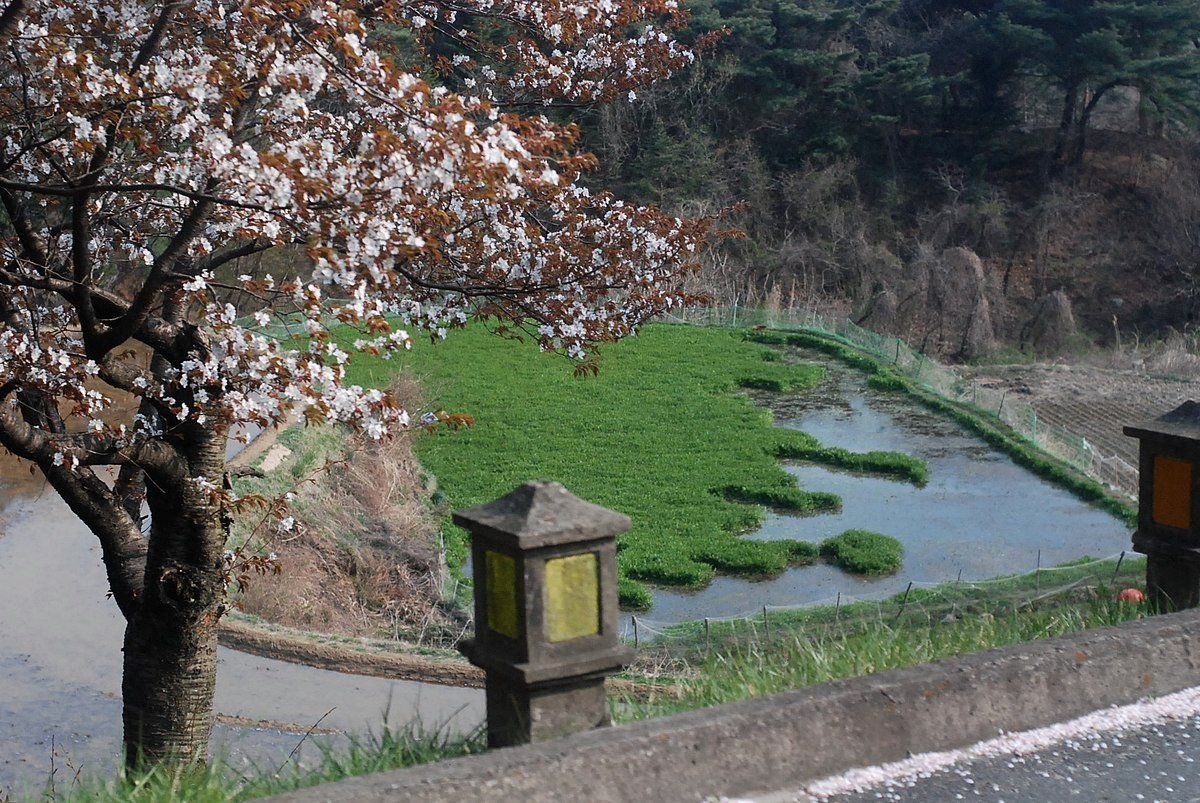
- Cherry blossoms in early April make Gyeongju visually jaw-dropping (Bomun Lake especially).
- Fall foliage peaks early-mid November at Bulguksa and Donggung.
- Photography at Wolji is best 1 hour after sunset (blue hour) — sunset itself is too bright.
- Skip Yangdong Folk Village on day trips unless you have a private car.
When to Visit Gyeongju
| Season | Why Go | Notes |
|---|---|---|
| Spring (Apr–May) | Cherry blossoms at Bomun Lake | Peak first week of April |
| Summer (Jun–Aug) | Long days for photography | Hot, humid |
| Autumn (Oct–Nov) | Foliage at Bulguksa | Peak Nov 5–15 |
| Winter (Dec–Feb) | Quiet, dramatic light | Wolji can be magical with snow |
What's Different Between Day Trip vs Overnight
| Activity | Day Trip | Overnight |
|---|---|---|
| Bulguksa, Seokguram | ✓ | ✓ |
| Daereungwon, Cheomseongdae | ✓ | ✓ |
| Wolji at sunset | ✓ | ✓ |
| Wolji at night | Maybe | ✓ |
| Gyeongju National Museum | Tight | ✓ |
| Yangdong Folk Village | No | ✓ |
| Bomun Lake | No | ✓ |
| Royal Tomb of Munmu (underwater) | No | ✓ |
| Templestay at Bulguksa | No | ✓ |
Frequently Asked Questions
Is one day in Gyeongju enough? For the highlights — yes. For deep history — no. Many travelers return for an overnight after a first day-trip taste.
Should I book KTX in advance? Yes — 2–3 days ahead. Saturday and peak-bloom tickets sell out.
Is Gyeongju worth the trip from Seoul? Absolutely — it's the historical heart of Korea. Skipping it is like visiting Italy and skipping Rome.
Is it better from Seoul or Busan? Busan if you have it on your itinerary already (30 min KTX). Seoul still very feasible (2 hours each way).
Can I do Gyeongju + Busan on the same trip? Yes — most travelers spend 2 nights in Busan, 1 night in Gyeongju.
Is Gyeongju good for photography? Among Korea's top 3 photography destinations. Wolji, Bulguksa, Daereungwon all postcard-grade.
Is hanbok worth renting? Yes — Korean rentals are ₩15,000–25,000 for 4 hours and free admission to most sites.
What's the difference between Wolji and Donggung? Same UNESCO site — Donggung Palace surrounds Wolji Pond. They're sold as one ticket.
Are there guided tours? Yes — many Korean travel platforms (Klook, Trazy) bundle KTX + tour-guide + temple entries.
Is English signage available? At UNESCO sites, yes. At smaller restaurants, expect Korean only.
What if it rains? The Gyeongju National Museum (free) is the rainy-day pivot. Bulguksa is partially indoor; Wolji loses some magic in heavy rain.
Can I drive there? Yes — but KTX is faster, cheaper, and doesn't require parking knowledge.
Final Thoughts
Gyeongju is the day-trip that turns a Korea trip into a "Korea trip" — the moment you realize the country is older, deeper, and more layered than the K-pop and skyscraper image. Eight hours, two UNESCO temples, a thousand-year-old observatory, royal tombs, hanok cafes, and a sunset reflection that ends every photographer's day in awe.
If you have 5+ days in Korea and you're skipping Gyeongju, reconsider. If you can stretch it to two days, you'll come away calling it your favorite stop.