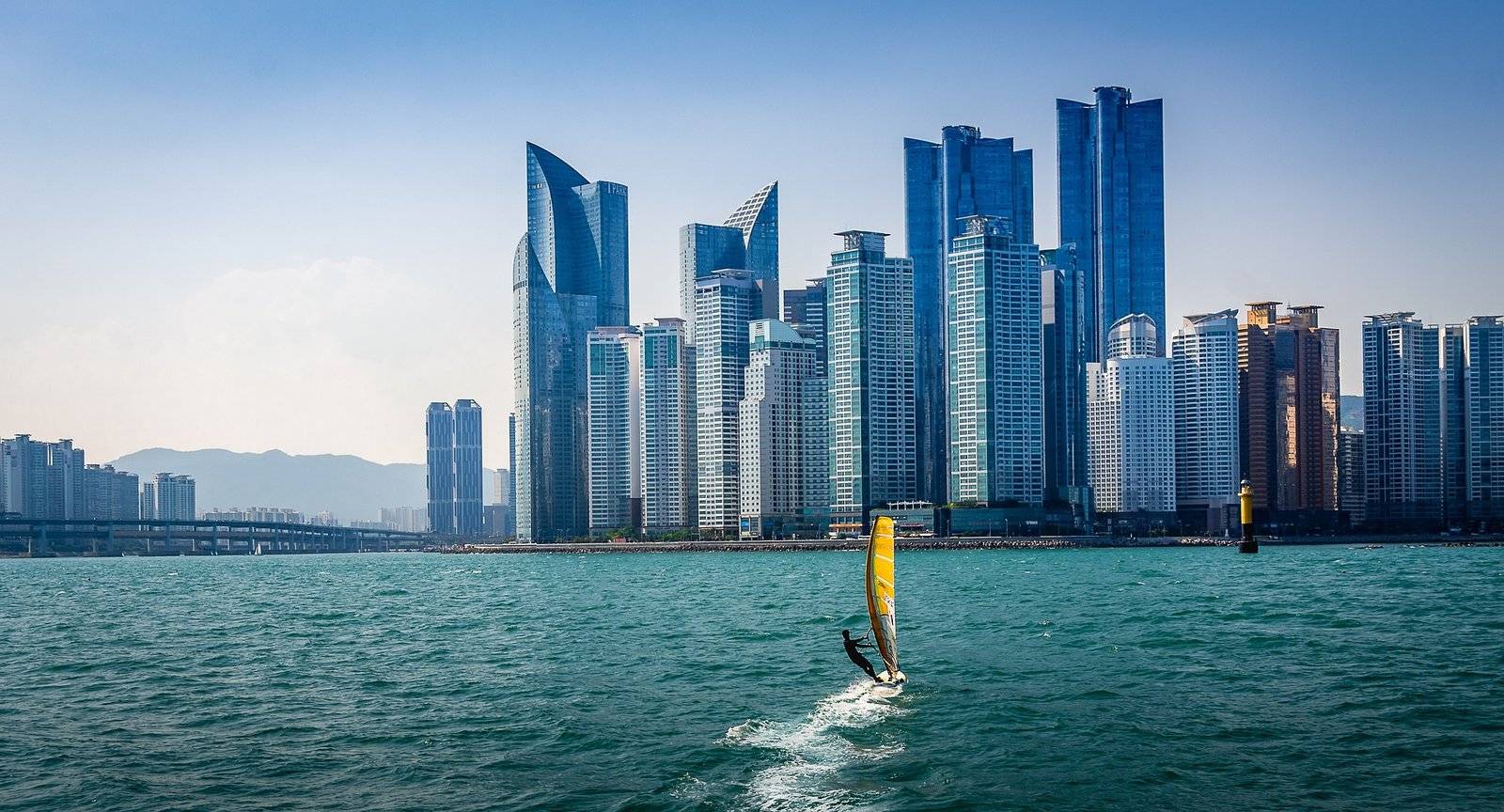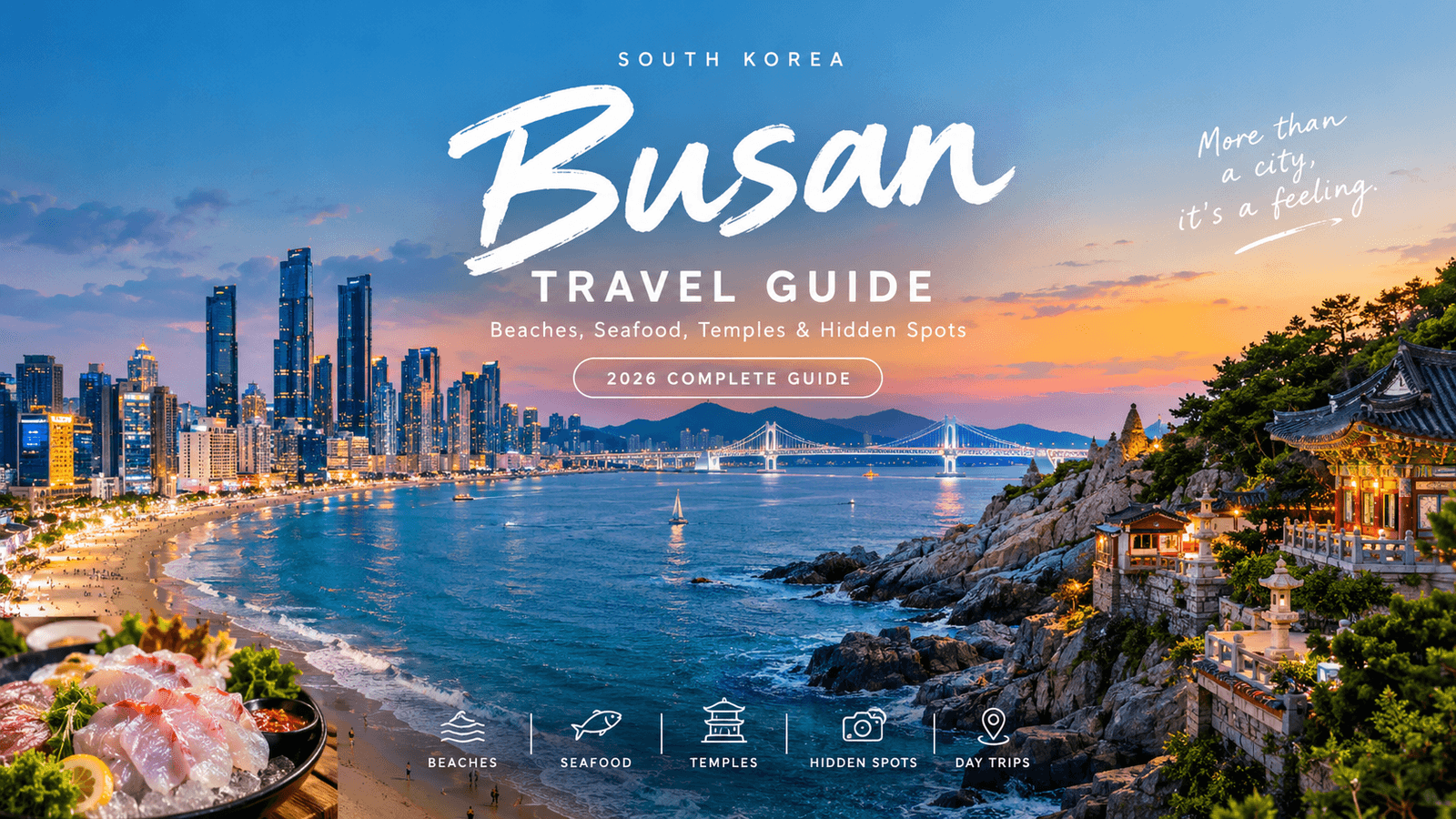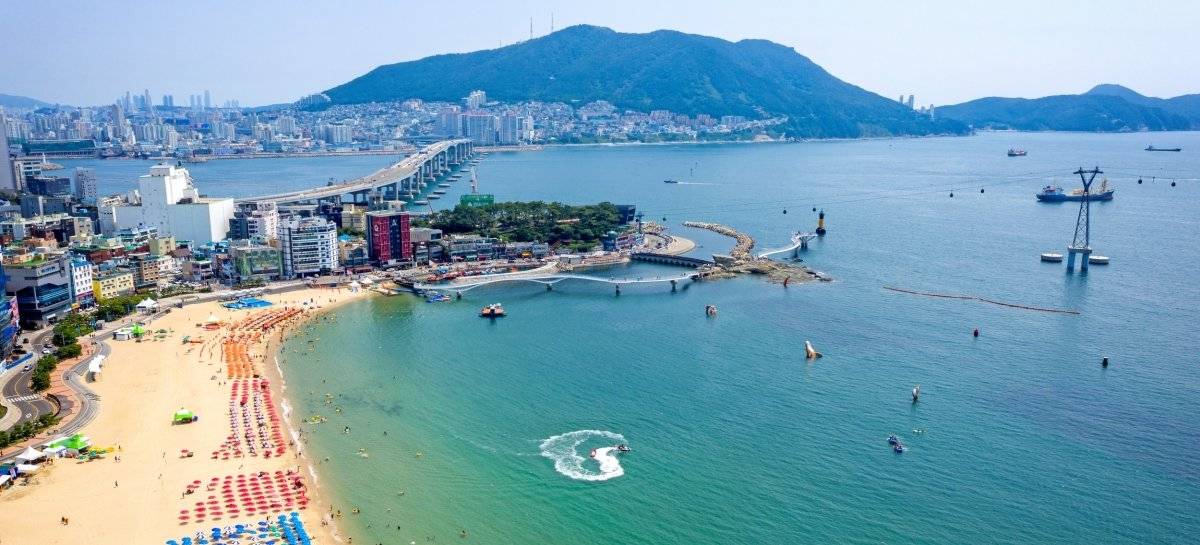
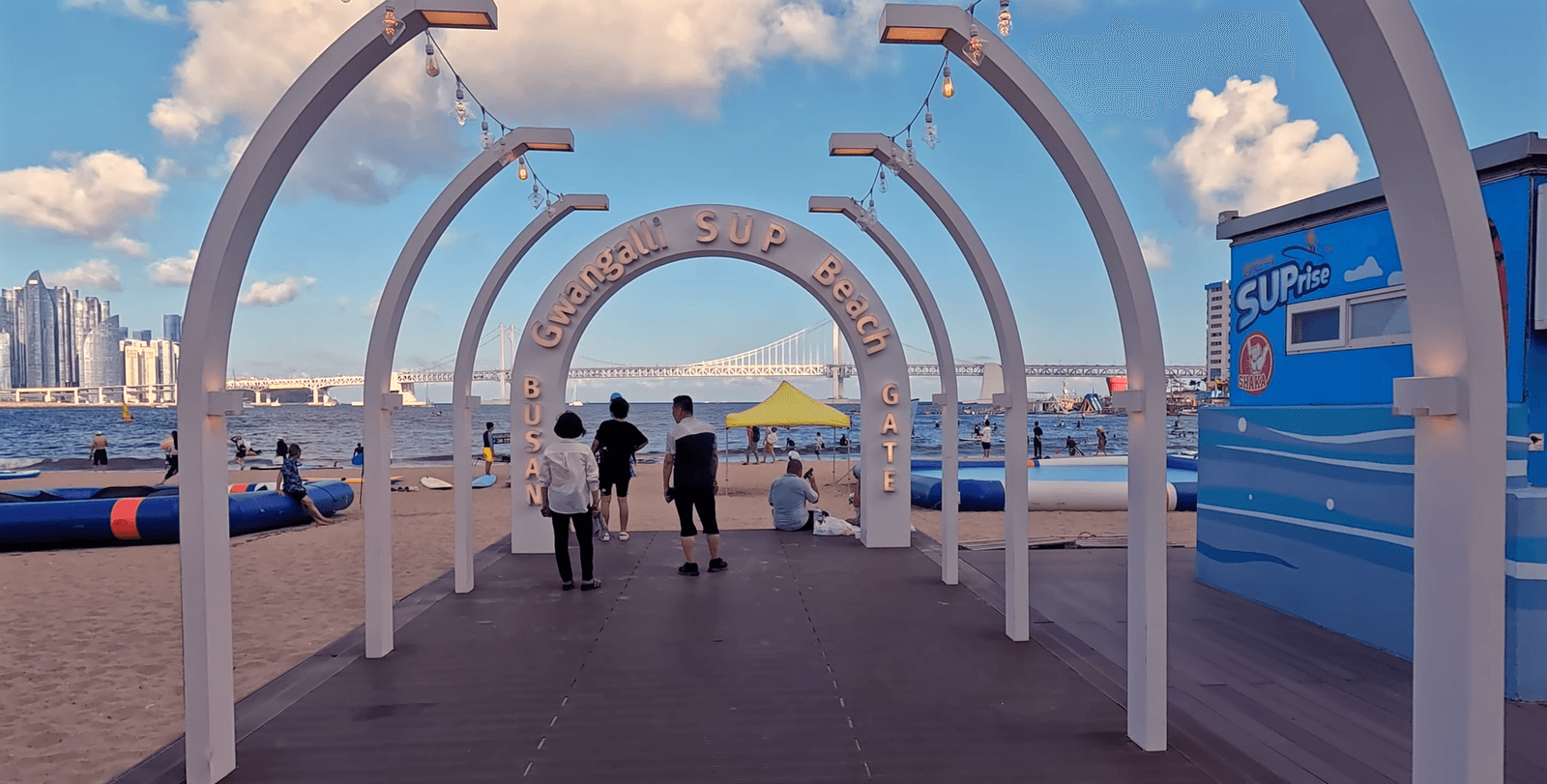
If Haeundae is Busan's most famous beach, Gwangalli Beach (광안리해수욕장) is its more atmospheric, locally beloved one. The 1.4 km golden-sand crescent runs along the southeastern Busan coast, framed by the iconic Gwangan Bridge (the Diamond Bridge) — one of the most photographed bridges in Korea, especially when it lights up at night.
It's the beach Koreans actually choose for evening strolls, fireworks festivals, and seaside drinks. Here's the complete 2026 guide.
Quick Facts
- What: A 1.4 km beach in southeast Busan, framed by the Gwangan Bridge
- Where: Suyeong-gu, Busan
- Subway: Gwangan Station (Line 2), Exit 3 — 5 minute walk
- Open: 24 hours, free
- Best for: Evening strolls, sunset/night views, café crawls
- Iconic event: Busan International Fireworks Festival (October)
Why Gwangalli Over Haeundae?
Both beaches are great. Some reasons locals prefer Gwangalli:
- The Diamond Bridge view. The Gwangan Bridge is permanently visible across the bay — and at night, the bridge lights up in synchronized colors that reflect on the water.
- Calmer atmosphere. Less hotel-tower density, more low-rise cafés and bars.
- Better evening culture. The promenade is alive at night with families, couples, and street performers.
- Café and bar scene. Gwangalli's beachfront bars and rooftop cafés rival anywhere in Korea.
- Drone shows. The city runs regular drone-light displays over the bay (Saturday nights, weather permitting).
- The fireworks festival. Korea's biggest fireworks festival (Busan International Fireworks Festival) happens here every October.
What to Do at Gwangalli
1. Walk the Beach Promenade
A wide pedestrian boardwalk runs the full 1.4 km length of the beach. Best walked at sunset when the bridge starts to light up.
2. Beachfront Cafés & Rooftop Bars
The street running parallel to the beach is packed with cafés on the ground floor and rooftop bars above. Favorites:
- The Foam Cafe — beachfront, signature lattes
- Magnate Coffee — third-wave roastery
- MILLAC THE MARKET — modern food hall with rooftop views
- VR Cafe — Korean-style café with Diamond Bridge views
3. Saturday Night Drone Show
Free drone-light show over the bay, typically Saturday evenings. The drones form animated shapes synchronized to music — Busan's version of a fireworks show, but more sustainable.
4. Stand-Up Paddleboarding & Water Sports
Several rental shops at the western end of the beach offer paddleboards, kayaks, and small boat rentals.
5. Beach Dining (Hoe and Seafood)
Small alleyways behind the main road are full of fresh seafood restaurants — choose your fish from a tank, eat sashimi while watching the bridge.
6. Busan International Fireworks Festival (October)
The biggest fireworks festival in Korea. Hundreds of thousands gather along the beach to watch coordinated displays from boats and the bridge. Tickets for premium viewing seats sell out months ahead.
7. The Bay 101 (Marina Walk)
A 15-minute walk along the coast leads to The Bay 101, a high-end marina complex with bars, restaurants, and one of the best skyline night views in Busan (the Marine City reflection on calm water).
Best Time to Visit
By Time of Day
- Sunrise: Quiet, beautiful. Few visitors.
- Late afternoon: Beach lounging, café-hopping.
- Sunset: The Diamond Bridge starts to light. Most photogenic window.
- After dark: Atmospheric peak. Bridge lights, drone shows, beachfront restaurants alive.
By Season
- Summer (July–August): Peak swimming season. Water temperatures ~22–25°C.
- Spring (April–June): Mild, beach café-friendly.
- Autumn (September–October): Clear skies, fireworks festival, perfect temperatures.
- Winter: Cold for swimming but the bridge view is still spectacular. Beach quiet.
How to Get There
Subway: Gwangan Station (Line 2), Exit 3 → walk 5 minutes south to the beach.
By taxi:
- From Haeundae: ~₩7,000 (~10 minutes)
- From Busan Station: ~₩12,000 (~20 minutes)
- From Gimhae Airport: ~₩30,000 (~40 minutes)
A Suggested Gwangalli Evening
5:00 PM — Arrive at Gwangan Station, walk to the beach. 5:15 PM — Beach walk along the promenade. 6:00 PM — Coffee or beer at a beachfront rooftop. 7:00 PM — Sunset on the beach. 7:30 PM — Diamond Bridge lights start. 8:00 PM — Dinner at a seafood restaurant in the back alleys. 9:30 PM — Walk to The Bay 101 for marina drinks. 10:30 PM — Return to hotel.
Tips From Locals
- Don't swim alone after dark. No lifeguards at night.
- Bring layers in summer evenings. Sea breeze cools down quickly.
- The eastern end is quieter. Western end is busier with vendors and street performers.
- Park early or take subway. Gwangalli parking is limited and expensive on weekends.
- Watch for the Saturday drone show. Schedule typically posted on the city's tourism site.
- Photograph the bridge at the "blue hour" (15–20 minutes after sunset) — the sky turns deep blue and the bridge lights pop.
What to Combine With Gwangalli
- The Bay 101 / Marine City (15 min walk east — best night views)
- Igidae Coastal Trail (15 min taxi south — sunset cliff walk)
- Haeundae Beach (15 min subway east)
- Busan Cinema Center (10 min walk — Korea's largest cinema complex)
- Centum City Department Store (one stop subway)
A perfect Busan night: Gwangalli sunset → Bridge lights at blue hour → Seafood dinner → The Bay 101 marina drinks.
Frequently Asked Questions
Can I swim at Gwangalli? Yes in summer (June–September). Lifeguards on duty during peak season.
When does the Diamond Bridge light up? Year-round, every evening after sunset until ~midnight.
Is Gwangalli or Haeundae better? Different. Haeundae is bigger and more famous; Gwangalli is more local and atmospheric, especially at night.
Is the beach clean? Yes — Gwangalli is well-maintained.
Can I bring alcohol? Yes — Korean beach culture allows beer and soju on the beach.
Are there bathrooms? Yes, public bathrooms along the promenade.
Is it safe at night? Very. Korean beaches are generally extremely safe, even after dark.
Final Thoughts
Gwangalli Beach is the Busan moment most travelers remember. The Diamond Bridge lit up at night, café tables along the sand, the smell of grilled seafood from the alley restaurants, and a slow walk along the promenade with the Pacific stretching dark beyond — it's the city at its most romantic.
Time your visit for sunset, stay through the blue hour, and end the night at a rooftop bar or seaside seafood spot. Few Korea evenings beat it.