Of Seoul's five royal palaces, Deoksugung (덕수궁) is the unusual one. It's the smallest. It's the only one with European-style stone halls standing alongside traditional wooden pavilions. It's the one you can wander through for an hour after work, between meetings, or as a casual stop in the middle of downtown — and it's the only royal palace inside the wall of skyscrapers that surround Seoul City Hall Plaza.
Deoksugung is the palace of Korea's most turbulent decades: the late 19th century opening to the West, the Japanese occupation, the brief Korean Empire, and the loss of the Joseon Dynasty. Walk through it slowly and you can read all of that in the architecture itself.
This is the complete 2026 guide to visiting Deoksugung — what to see, when to go, and the layered story that makes it the most fascinating palace in Seoul.
Quick Facts
- Built: Originally a residence (1593), upgraded to a royal palace in 1897
- Size: Roughly 1/8 the size of Gyeongbokgung
- Open: Tuesday–Sunday, 9:00 AM – 9:00 PM (closed Mondays)
- Admission: ₩1,000 adults / ₩500 children / Free in hanbok
- Subway: City Hall Station (Lines 1 or 2), Exit 2 — 1 minute walk
- Time to spend: 1.5–2 hours (more for the museum)
A Short History
Deoksugung's story is unusual. The buildings here weren't originally a royal palace — they were the temporary residence of King Seonjo after the main palaces were destroyed during the 1592 Japanese invasions. For nearly three centuries, it sat as a secondary royal villa, while Gyeongbokgung and Changdeokgung served as the working capitals of the dynasty.
In 1897, the political winds shifted. King Gojong, having taken refuge in the nearby Russian Legation during a turbulent year, declared the founding of the Korean Empire and made Deoksugung his official palace. He commissioned the Stone Hall (Seokjojeon) — a Western-style stone building unprecedented in Korean royal architecture — and the palace became Korea's window onto a rapidly modernizing world.
It also became the place where the empire ended. King Gojong was forced to abdicate here in 1907 and lived out his final years in the palace until his death in 1919 — a death many believe was the catalyst for the March 1st Independence Movement against Japanese rule.
The result: a royal palace that physically embodies the moment Korea grappled with modernity, colonization, and identity. Walking it today is a quiet but affecting experience.
What to See Inside
Daehanmun Gate (대한문)
The main gate facing the City Hall Plaza. Daily changing of the royal guard ceremonies happen here at 11:00 AM, 2:00 PM, and 3:30 PM (Tuesday–Sunday). This is one of Seoul's most photographed cultural ceremonies and the easiest to access — Daehanmun is a 60-second walk from the City Hall subway exit.
Junghwajeon (중화전) — The Throne Hall
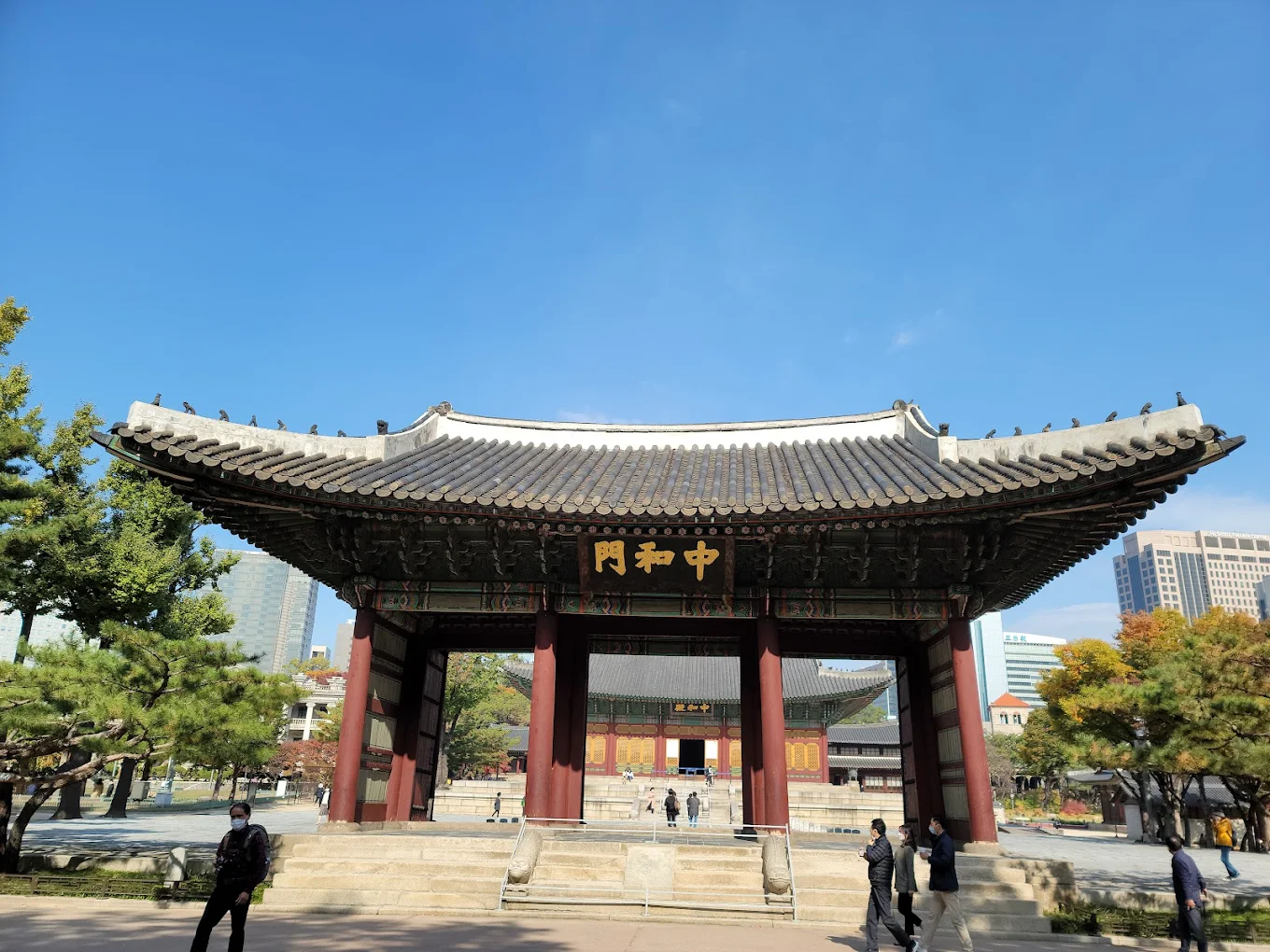
Walk through the entrance gate and you'll find the throne hall in the center, raised on a stone platform. The interior is more austere than Gyeongbokgung's — partly because much of the palace was lost to fire and rebuilt smaller. The painted ceiling features dragons playing among clouds, and the throne is backed by the iconic Sun-Moon-Five-Peaks screen.
Seokjojeon (석조전) — The Stone Hall
The most surprising building in any Korean royal palace. Designed by British architect John Reginald Harding and completed in 1910, Seokjojeon is a neoclassical stone building with a Greek-revival colonnade — utterly out of place beside the wooden hanok pavilions, and yet undeniably part of the palace's late history.
Inside, the building has been restored to its early 20th-century interior: chandeliers, parquet floors, period furnishings. Free guided tours run several times daily — book a slot at the entrance, or reserve in advance through the Cultural Heritage Administration.
Seokjojeon West Wing (Now National Museum of Modern and Contemporary Art – Deoksugung Branch)
Houses rotating exhibitions of early modern Korean art. Separate ticket required.
Hamnyeongjeon (함녕전)
The royal residence where King Gojong lived in his later years. Smaller, more intimate, with the actual rooms where he held audiences and where he died in 1919. A quieter, more reflective space than the throne hall.
Junmyeongdang & Jeukjodang
Smaller pavilions used for royal banquets and ceremonies. Often the most peaceful corner of the palace.
The Garden
A small but beautiful pond garden with a Western-style fountain — another late-Joseon nod to European royal architecture. Especially photogenic in autumn when the maple trees frame the water.
When to Visit
By Time of Day
- Morning (9–11 AM): Calmest. Soft light. Excellent for photos.
- Afternoon (1–4 PM): Best for the changing-of-the-guard ceremonies (2 PM and 3:30 PM).
- Evening (after 6 PM): Deoksugung is one of the few palaces open late. The illuminated buildings against the city skyline make this Seoul's most romantic palace at night.
By Season
- Autumn (October–November): The single best season. Maple foliage frames the entire palace.
- Spring (April–May): Cherry blossoms scattered around the grounds.
- Winter: The Stone Hall looks particularly striking against snow.
- Summer: Hot, but the trees provide shade and the palace is quieter than peak season.
How to Get There
Subway: City Hall Station (시청역, Lines 1 and 2), Exit 2. The palace gate is 30 seconds away.
Walking: From Gwanghwamun, about 8 minutes south.
By bus: Many central Seoul routes stop at "Deoksugung" or "City Hall." Search "덕수궁" in Naver Map.
Combine It With Doldam-gil (Stone Wall Road)
Deoksugung is the rare attraction where the outside is as famous as the inside. The Doldam-gil Stone Wall Road runs along the palace's western and northern walls and is one of the most photographed walks in Seoul — particularly in autumn.
The smart play: tour the palace inside (1.5 hours), then exit and walk the Stone Wall Road (30 minutes) along the outside.
What to Pair With Deoksugung
- Doldam-gil walk (just outside the wall)
- Seoul Museum of Art (SeMA) — directly adjacent, often free
- Jeongdong Observatory Café Darak — 13th-floor city observatory with aerial views over the palace
- Cheonggyecheon Stream — 10-minute walk for a riverside stroll
- Gwanghwamun Square & Gyeongbokgung — 15 minutes north
- Jongmyo Shrine — 20-minute walk east
A perfect downtown afternoon: Deoksugung (1:00) → Stone Wall Road (3:00) → SeMA (3:30) → Jeongdong Observatory at sunset (5:00) → Cheonggyecheon Stream walk (6:00) → dinner.
Practical Tips
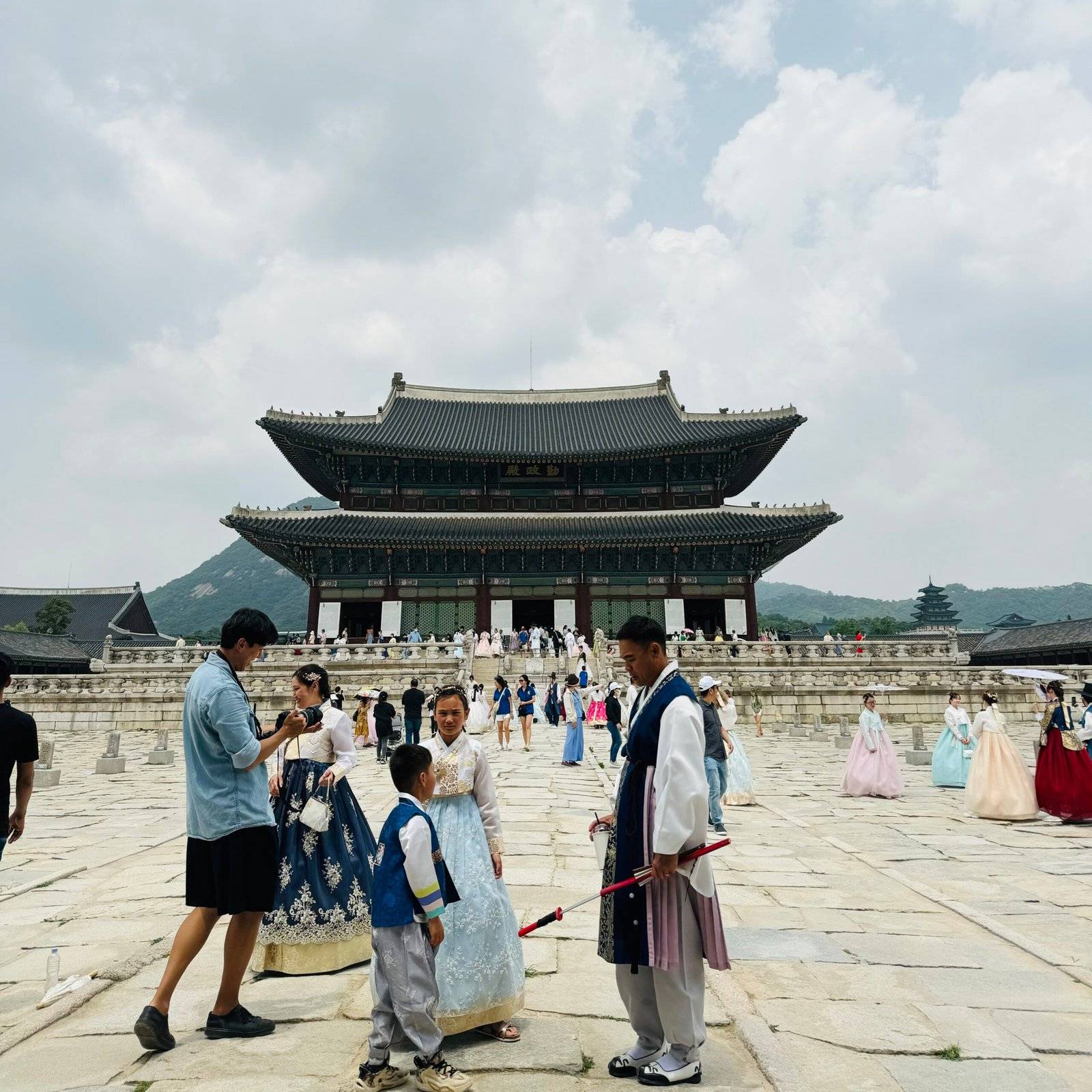
- Free in hanbok. Rent traditional clothing at any Bukchon or Insadong rental shop and walk in for free.
- Combo ticket: Get the Royal Palace Pass (₩10,000) for entry to all four major palaces + Jongmyo Shrine within 3 months.
- Audio guide: Free English audio guides available at the entrance with a passport deposit.
- The grounds are flat. Wheelchair and stroller accessible.
- Photography: Permitted everywhere outside; some interiors restrict flash.
- Closed Mondays.
Changing of the Royal Guard Ceremony
Don't skip this — it's one of the highlights of visiting Deoksugung. Three times daily (11 AM, 2 PM, 3:30 PM, Tuesday–Sunday), uniformed guards parade in front of Daehanmun Gate in Joseon-era costume, with banners, drums, and ceremonial weapons. The full ceremony lasts about 15 minutes. Front-row spots fill up about 10 minutes before showtime.
Deoksugung vs Other Seoul Palaces
| Deoksugung | Gyeongbokgung | Changdeokgung | |
|---|---|---|---|
| Size | Small | Largest | Medium |
| Ticket | ₩1,000 | ₩3,000 | ₩3,000 (+₩5,000 garden) |
| Western architecture | Yes (Stone Hall) | No | No |
| Open at night | Yes (until 9 PM) | No (special events only) | No (special events only) |
| Crowds | Light–moderate | Heavy | Moderate |
| Best for | History, atmosphere, evening visits | First-time visitors, scale | Secret Garden, intimacy |
If you only have one palace visit on your trip, choose Gyeongbokgung. If you have two, add Changdeokgung's Secret Garden. If you have three, Deoksugung's late-evening visit is the most atmospheric of the bunch.
Frequently Asked Questions
How long should I plan? 1.5–2 hours. Add 30 minutes for the changing of the guard if you're timing your visit for it.
Is Deoksugung worth visiting if I've already seen Gyeongbokgung? Yes. The Western architecture, the late-evening hours, and the smaller, more contemplative scale make it a meaningfully different experience.
Can I visit at night? Yes — Deoksugung is open until 9 PM. The lit-up palace at night is one of Seoul's most romantic experiences.
Is hanbok rental worth it? Absolutely. Free entry to all five royal palaces in hanbok. Rentals run ₩15,000–25,000 for 2–4 hours.
Can I take photos inside the buildings? Generally yes, with no flash. Some specific exhibitions (Stone Hall interior tour) restrict photography.
Final Thoughts
Deoksugung is the palace where Korea's modern history happened. It's small, intimate, and full of architectural surprises — the Stone Hall, the European-style fountain garden, the residence where a king lived out his final years. Visit in late autumn when the maples turn red, time your arrival for the 2 PM royal guard ceremony, and wander the grounds slowly. Then walk out and do the Stone Wall Road as the sun sets.
It's the most underrated royal palace in Seoul, and quietly one of the most rewarding.