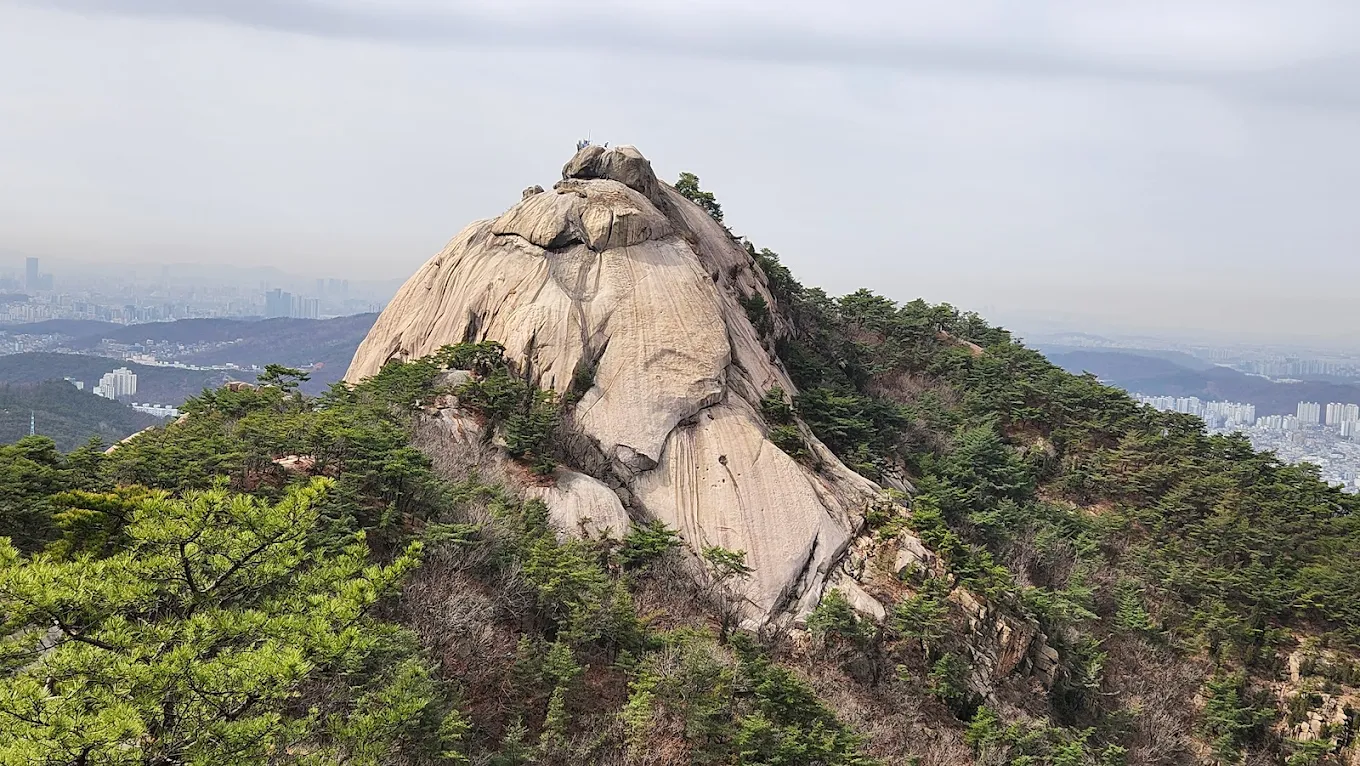
Rising dramatically at the northern edge of Seoul, Bukhansan National Park (북한산국립공원) is one of the world's most visited national parks — and the only one inside a major metropolis. With granite peaks, temple-dotted valleys, an ancient mountain fortress, and trails for every level, it offers a genuine wilderness escape just a subway ride from downtown.
This is the complete 2026 guide.
Quick Facts
- What: A mountain national park on Seoul's northern edge
- Where: Northern Seoul / Gyeonggi border
- Open: Daytime (trails open ~sunrise–sunset; some routes have seasonal closures)
- Admission: Free
- Difficulty: Easy valley walks to hard summit climbs
- Nearest access: Various — e.g., Gupabal Station (Line 3) + bus; Bukhansanseong area
Why Visit
Bukhansan ("north of the Han mountain") packs real mountain adventure into the capital — soaring granite peaks (the highest, Baegundae, ~836m), forested valleys, Buddhist temples, and the historic Bukhansanseong Fortress walls. Trails range from gentle temple strolls to a steep, rope-assisted scramble to the summit. The views over Seoul from the ridgelines are spectacular, and the foliage in autumn is stunning. It's the ultimate proof that you can hike a real mountain without leaving the city.
How to Get There
Bukhansan has many entrances; popular ones include:
- Bukhansanseong (Fortress) area: Gupabal Station (Line 3), Exit 1, + bus to Bukhansanseong.
- Doseonsa / Ui area: Bukhansan Ui Station (Ui LRT) for the eastern valleys.
- Jeongneung / Bukhansan Dul레길 entrances on various sides.
Check Naver/Kakao Map for the trailhead matching your chosen route.
What to See & Do
Baegundae Peak (the Summit)
The highest peak (~836m) — a challenging hike with rope-assisted granite scrambles near the top, rewarded by panoramic views over Seoul and the surrounding mountains. For fit, prepared hikers.
Bukhansanseong Fortress
Ancient stone fortress walls and gates winding over the ridges — history plus scenery on the popular Bukhansanseong route.
Temples
Mountain temples like Doseonsa and others dot the valleys — peaceful cultural stops along the trails.
Bukhansan Dulle-gil (Easy Loop Trails)
For those who don't want a summit climb, the Dulle-gil is a network of gentler forest loop trails circling the base — beautiful and accessible.
Seasonal Beauty
- Autumn: Brilliant foliage — one of Seoul's best.
- Spring: Fresh greenery and blossoms.
- Winter: Snow-dusted granite (icy trails — use caution/crampons).
When to Visit
- Autumn (Oct–Nov): Peak foliage — gorgeous but busy on weekends.
- Spring: Mild and green.
- Early morning: Beat crowds and heat; safer for long hikes.
- Avoid icy winter peaks without proper gear.
A Suggested Plan
8:00 AM — Subway + bus to the Bukhansanseong entrance. 8:30 AM — Hike up via the fortress route toward Baegundae (fit hikers) or a gentler valley/Dulle-gil trail. 11:30 AM — Summit/ridge views over Seoul (or a temple stop on easier routes). 1:30 PM — Descend; late lunch near the entrance. Afternoon — Return to the city (e.g., Gupabal / northern Seoul).
What to Combine With
- Bukhansanseong Fortress — on the popular summit route.
- Mountain temples (Doseonsa) — cultural stops on the trails.
- Northern Seoul neighborhoods — for food after your hike.
- Seoul City Wall (Bugaksan) — another historic mountain walk in the city.
- Jingwansa Temple — a serene temple near the western entrances.
Tips From Repeat Visitors
- Wear proper hiking shoes — the granite is steep and can be slippery.
- Pick a route to match your fitness — summit (hard) vs Dulle-gil (easy).
- Start early — it's one of the world's busiest parks on autumn weekends.
- Bring water, snacks, and layers — summits are colder and windier.
- Use crampons in winter — icy granite is dangerous.
- Check trail status — some routes close seasonally for protection/safety.
Bukhansan Routes Compared
| Route | Difficulty | Highlights |
|---|---|---|
| Baegundae Peak | Hard | Summit, rope scrambles, big views |
| Bukhansanseong Fortress | Moderate–hard | Fortress walls, ridge views |
| Dulle-gil loops | Easy | Forest walks, temples, accessible |
| Temple valleys (Doseonsa) | Easy–moderate | Culture + scenery |
Frequently Asked Questions
Is Bukhansan worth visiting? Yes — it's a genuine granite-peak national park inside Seoul, with trails for all levels and spectacular city views.
Is it free? Yes — entry is free.
How hard is the summit (Baegundae)? Challenging — a steep climb with rope-assisted granite scrambles near the top; for fit, prepared hikers.
Are there easy trails? Yes — the Bukhansan Dulle-gil offers gentler forest loop trails around the base.
How do I get there? Various entrances by subway + bus (e.g., Gupabal Station for the fortress route, Ui LRT for eastern valleys).
When is the best time to hike? Autumn for foliage and spring for mild weather; start early and avoid icy winter peaks without gear.
Final Thoughts
Bukhansan National Park is Seoul's wild side — granite summits, ancient fortress walls, and temple-filled valleys, all reachable by subway. Whether you scramble to Baegundae's peak or stroll the gentle Dulle-gil, you'll find a real mountain adventure (and the best free views of the city) right at the capital's doorstep. Go early, wear good shoes, and enjoy.