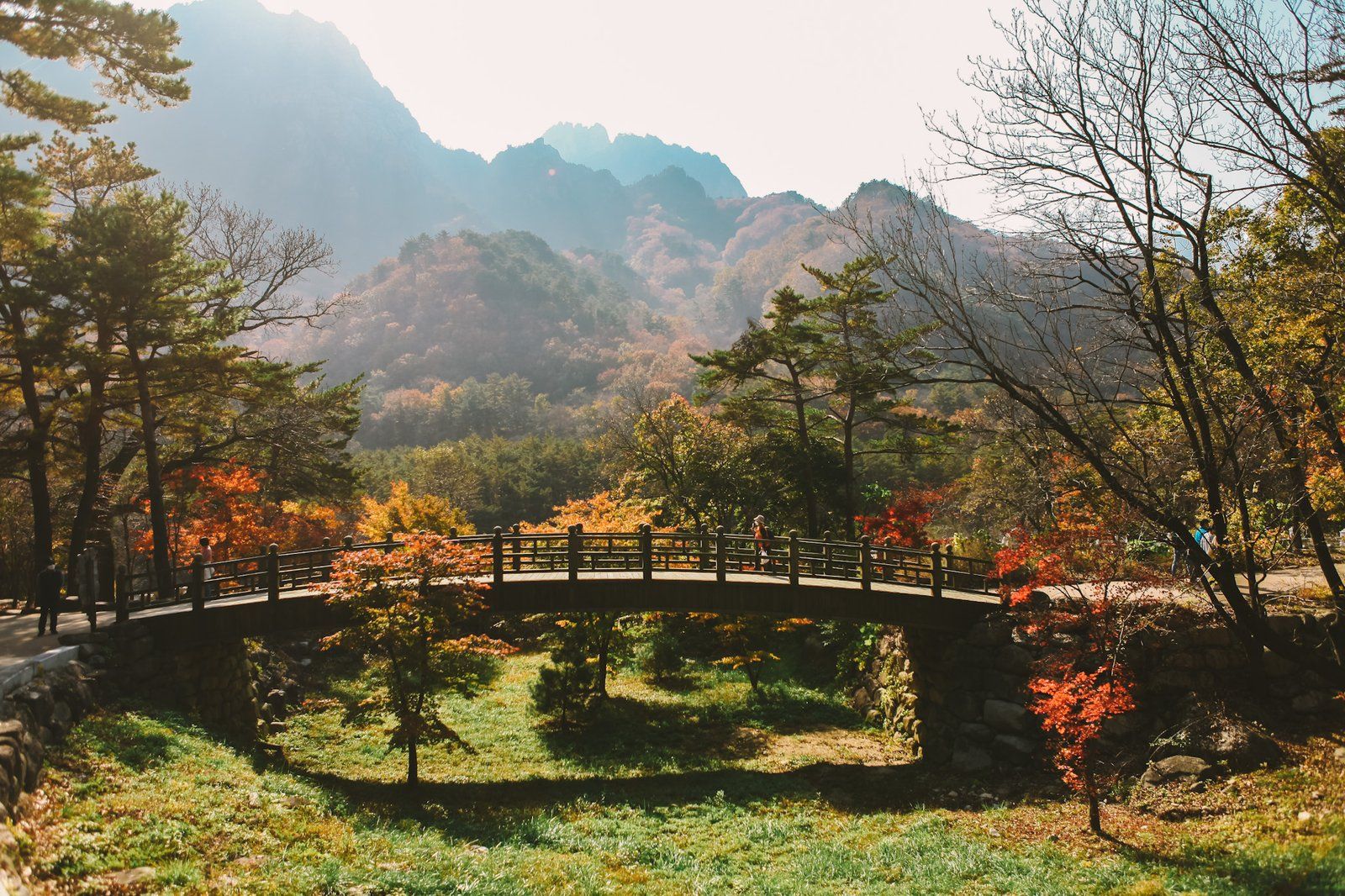
Korea's most celebrated national park, Seoraksan (설악산국립공원) rises in dramatic granite peaks above the east coast near Sokcho — a UNESCO Biosphere Reserve of soaring ridges, emerald valleys, waterfalls, and temples. Famous for the most spectacular autumn foliage in the country, it offers everything from an easy cable-car ride to one of Korea's toughest summit hikes. It's a bucket-list destination for nature lovers.
This is the complete 2026 guide.
Quick Facts
- What: Korea's premier mountain national park (UNESCO Biosphere Reserve)
- Where: Gangwon-do, near Sokcho on the east coast
- Open: Daytime (trails open ~sunrise; cable car ~09:00 AM–5/6:00 PM)
- Admission: Small park entry fee (~₩); cable car ticket separate
- Best for: Hiking, cable-car views, autumn foliage, temples, waterfalls
- Getting there: ~2.5 hours from Seoul by express bus to Sokcho + local bus
Why Visit
Seoraksan is where Korea's mountains reach their most magnificent — jagged granite spires, deep forested valleys, clear streams, and historic temples, all within reach of the beach town of Sokcho. It peaks in autumn (mid-to-late October), when the foliage is the most famous in the country, but it's beautiful year-round: fresh greenery in spring, lush valleys in summer, and snow-dusted peaks in winter. There's a route for everyone — from a gentle cable car to the grueling climb up Daecheongbong, the third-highest peak in South Korea.
How to Get There
- Take an express bus from Seoul (Express Bus Terminal) to Sokcho (~2.5 hours).
- From Sokcho, take a local bus (e.g., Bus 7/7-1) or taxi to the Seoraksan (Sogongwon) entrance.
- Many visitors stay overnight in Sokcho to start early.
What to See & Do
Seorak Cable Car to Gwongeumseong
The easy highlight: a cable car up to Gwongeumseong Fortress, where a short rocky scramble leads to panoramic ridge-and-valley views. Perfect for non-hikers (buy/queue early in foliage season).
Sinheungsa Temple & the Great Buddha
Near the main entrance, the historic Sinheungsa Temple and a giant bronze Buddha statue make a serene, easy stop.
Biseondae & Towangseong Falls
A relatively gentle valley walk to Biseondae rock formations; continue (steep metal stairs) toward the towering Towangseong Falls viewpoint.
Ulsanbawi Rock
A strenuous but rewarding hike up thousands of steps to the iconic Ulsanbawi granite ridge — epic views for fit hikers (allow most of a day).
Daecheongbong Peak (Hardcore)
The summit (~1,708m) is a long, demanding hike — for experienced, well-prepared hikers only, sometimes done as an overnight.
Heundeulbawi (Rocking Rock)
A famous balancing boulder on the way toward Ulsanbawi — a fun, easier landmark.
When to Visit
- Autumn (mid–late October): Korea's most famous foliage — and the busiest time.
- Spring & summer: Green valleys, waterfalls, and cooler mountain air.
- Winter: Snowy peaks (some trails close; check conditions).
- Early morning: Beat crowds and cable-car queues, especially in autumn.
A Suggested Plan (Day Trip)
Early AM — Express bus to Sokcho; local bus to the Seoraksan entrance. 9:30 AM — Sinheungsa Temple and the Great Buddha. 10:30 AM — Seorak cable car to Gwongeumseong for big views. 12:00 PM — Lunch near the entrance. 1:00 PM — Valley walk to Biseondae (and Towangseong Falls viewpoint if time). 4:00 PM — Return to Sokcho; Sokcho seafood / fish market dinner. Evening — Bus back to Seoul (or overnight to hike Ulsanbawi next day).
What to Combine With
- Sokcho — beach town with a famous fish market and seafood.
- Naksansa Temple & Naksan Beach — coastal temple nearby.
- Daepohang Port — fresh seafood and grilled fish.
- Abai Village (Sokcho) — known for Squid Game fame and Korean-style sausage (sundae).
- Gangneung — coffee culture and the East Sea coast, further south.
Tips From Repeat Visitors
- Go early in autumn — foliage weekends are extremely crowded; cable-car queues are long.
- Wear proper hiking shoes — even "easy" trails are rocky.
- Pick a route to match your fitness — cable car (easy) vs Ulsanbawi/Daecheongbong (hard).
- Stay overnight in Sokcho to start at sunrise and add the seafood scene.
- Check weather and trail status — mountain conditions change fast.
- Bring water, snacks, and layers — the summit is much colder than the base.
Seoraksan Routes Compared
| Route | Difficulty | Time | Best for |
|---|---|---|---|
| Cable car (Gwongeumseong) | Easy | 1–2 hrs | Everyone, views |
| Sinheungsa + Buddha | Easy | 1 hr | Culture, families |
| Biseondae valley | Easy–moderate | 2–3 hrs | Scenic walkers |
| Ulsanbawi | Hard | 4–5 hrs | Fit hikers |
| Daecheongbong (summit) | Very hard | Full day+ | Experienced hikers |
Frequently Asked Questions
When is the best time to visit Seoraksan? Autumn (mid-to-late October) for Korea's most famous foliage; spring and summer for green valleys and waterfalls.
How do I get there from Seoul? Express bus to Sokcho (~2.5 hrs), then a local bus or taxi to the Seoraksan entrance.
Is there an easy option for non-hikers? Yes — the cable car to Gwongeumseong offers spectacular views with minimal walking.
How hard is Ulsanbawi? Strenuous — thousands of steps over 4–5 hours round trip; rewarding but for fit hikers.
Do I need to stay overnight? A day trip works for the cable car and valley walks; overnight in Sokcho is better for big hikes and the seafood scene.
Is there an entry fee? Yes — a small national park entry fee, with the cable car ticketed separately.
Final Thoughts
Seoraksan is Korea's mountains at their most breathtaking — granite peaks, emerald valleys, temples, and the country's most famous autumn colors, all beside the seafood town of Sokcho. Whether you ride the cable car or climb Ulsanbawi, go early, dress for the mountain, and you'll experience the very best of Korea's wild landscapes.