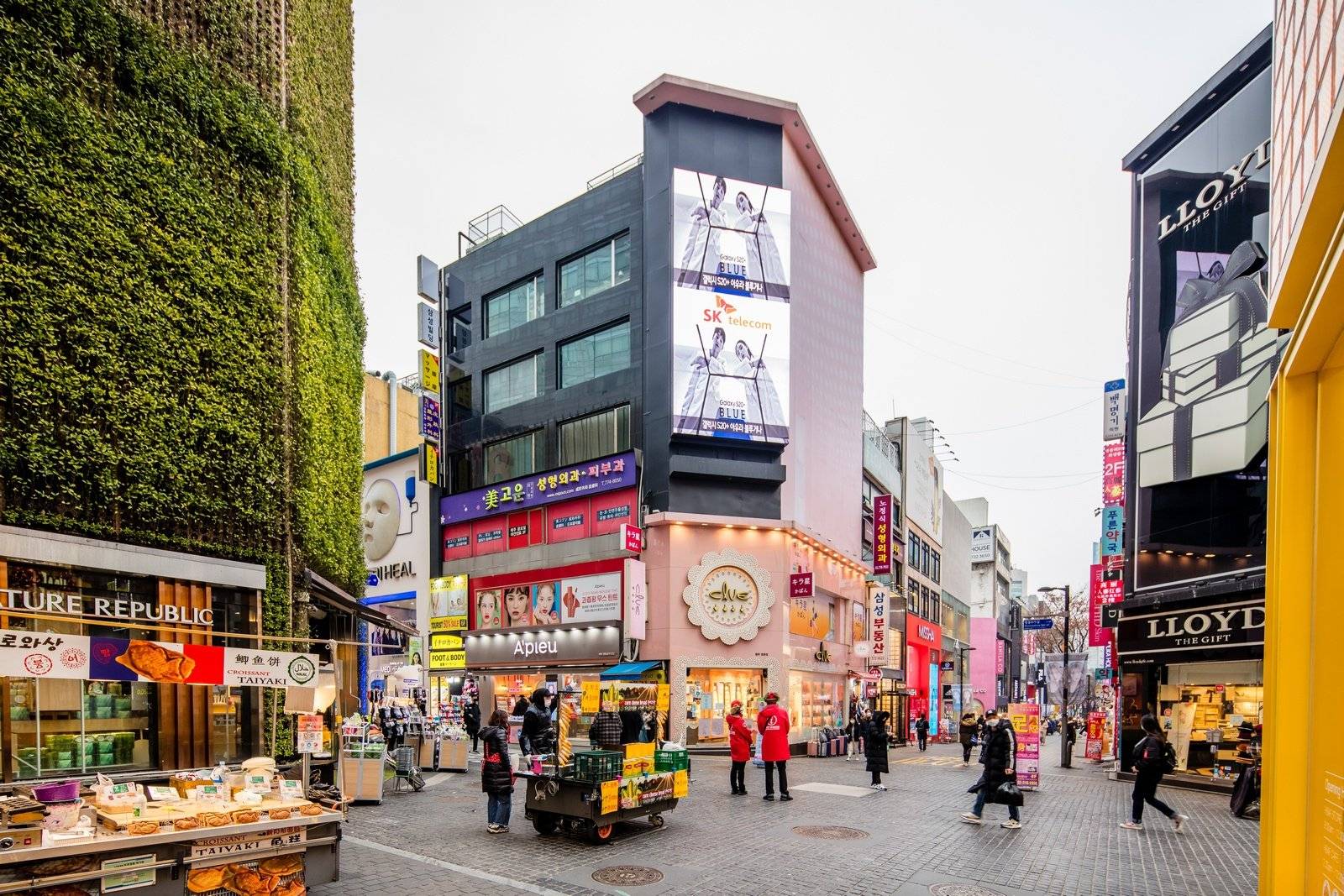
In the middle of Seoul's busiest shopping district, where neon signs and street-food smoke fill the air, sits one of the most unexpected sights in the city: a soaring red-brick Gothic cathedral, almost 130 years old, still active for daily mass. Myeongdong Cathedral (명동성당) is the spiritual home of Korean Catholicism, a National Historic Site, and one of the most photographed buildings in central Seoul.
It's also free, open daily, and a peaceful 15-minute pause in the middle of an otherwise high-energy neighborhood.
This is the complete 2026 guide to visiting Myeongdong Cathedral — its history, what to see, and how to fit it into your downtown Seoul afternoon.
Quick Facts
- What: Korea's most important Catholic cathedral, completed 1898
- Where: Myeongdong, Jung-gu, Seoul
- Subway: Myeongdong Station (Line 4), Exit 8 — 5 minute walk; or Euljiro 1-ga Station (Line 2), Exit 5 — 7 minute walk
- Open: 6:00 AM – 9:00 PM (worship and visitors)
- Admission: Free
- Best for: Architecture, history, quiet pause, photos
Why It's Worth a Visit
1. The architecture. Myeongdong Cathedral is the first Gothic-style church built in Korea, completed in 1898. Red brick, soaring nave, vaulted ceilings, and stained-glass windows — entirely uncommon in Korean cityscapes.
2. The history. Beyond its religious role, the cathedral was a center of Korean democratic movements during the 1970s–80s authoritarian period. Pro-democracy protesters routinely sought sanctuary inside the cathedral grounds, where police were reluctant to enter.
3. The contrast. Standing on the cathedral steps, with the spire above you and the noise of Myeongdong below, is one of Seoul's most striking quiet moments.
4. The interior. Visitors are welcome inside outside of mass times. The interior is hushed, lit by stained-glass windows, with seating for over 1,000.
A Short History
Korean Catholicism dates back to the 18th century — initially imported by Korean scholars who encountered Catholic texts in China. The early Korean Catholic church faced severe persecution, with thousands of believers martyred in waves of suppression throughout the 1800s.
In 1882, after Korea opened to Western powers, the church's status improved. Construction on the cathedral began in 1892 on a site that had been associated with persecuted Korean Catholics for nearly a century. The cathedral was completed in 1898 — Korea's first Gothic-style church and the seat of the Archdiocese of Seoul.
In the 20th century, Myeongdong Cathedral played a unique civic role:
- 1970s–1980s: During the authoritarian governments of Park Chung-hee and Chun Doo-hwan, the cathedral became a sanctuary for student protesters, dissidents, and labor organizers. Police were often unwilling to breach church grounds, and the cathedral effectively served as the moral conscience of the democracy movement.
- 1987 democracy uprising: A pivotal moment in Korean democracy occurred when student protesters took refuge inside the cathedral, drawing global attention to the regime's crackdowns.
Today, the cathedral remains both a religious center and a quiet symbol of Korea's modern democratic identity.
What to See
The Exterior
The brick Gothic facade is the iconic shot. Most photographers capture it from the south, with the spire rising above the front steps. Best light: late afternoon (3–5 PM in winter, 5–7 PM in summer).
The Nave (Interior)
Walk inside outside of mass hours. The nave is bright and quiet, with high arches, polished wood pews, and rows of stained-glass windows depicting scenes from the gospels and Korean Catholic history.
The Crypt
Below the cathedral is a small crypt where remains of Korean Catholic martyrs are interred. A solemn space worth visiting if you have additional time.
The Cathedral Plaza
The front plaza often hosts small markets, especially on Saturdays. Catholic bookshops, religious goods stores, and the occasional bake-sale fundraiser line the surrounding lanes.
Hidden Cafés
Several quiet cafés operate in the buildings adjacent to the cathedral — popular with both locals and foreign Catholic pilgrims.
When to Visit
By Time of Day
- Morning (8–10 AM): Calmest. Mass times in the early morning may briefly close the nave.
- Mid-afternoon (2–4 PM): Best general access, good light.
- Sunset (around 6 PM): Soft golden light on the brick façade. The most photogenic window.
- Evening (after 7 PM): The cathedral is lit at night, atmospheric for photos.
By Season
- Christmas (December): The cathedral is one of Seoul's most decorated for Christmas — wreaths, mass schedules, and a large outdoor nativity scene.
- Easter (March/April): Major masses with full Korean Catholic community participation.
- Year-round: Always open and beautiful in any season.
Mass Schedule
Multiple masses daily in Korean. One Sunday English-language mass (typically 9:00 AM, but verify on the cathedral website). Visitors are welcome at all masses, with respectful attire and behavior.
How to Visit Respectfully
The cathedral remains an active place of worship. Please:
- Dress modestly. No shorts, sleeveless tops, or beachwear inside.
- Remove hats inside.
- Keep voices low in the nave and chapels.
- Don't use flash photography inside.
- Don't enter during mass unless you intend to participate. Mass times are posted at the entrance.
- Avoid sitting in pews if mass is starting — stand at the back if you're observing only.
How to Get There
Subway:
- Myeongdong Station (Line 4), Exit 8 — walk 5 minutes north
- Euljiro 1-ga Station (Line 2), Exit 5 — walk 7 minutes south
Walking from major sights:
- From Cheonggyecheon Stream: 8 minutes
- From Lotte Department Store: 5 minutes
- From Namsan Cable Car: 15 minutes
What to Combine With Myeongdong Cathedral
The cathedral is in the heart of central Seoul — pair with:
- Myeongdong Shopping Street (5 min walk)
- Myeongdong Street Food (10 min walk after dark)
- Lotte Department Store Main Branch (5 min)
- Namsan Cable Car & N Seoul Tower (15 min walk + cable car)
- Cheonggyecheon Stream (8 min)
- Deoksugung Palace (15 min walk)
- Olive Young Myeongdong (5 min)
A perfect afternoon: Myeongdong Cathedral → Lunch nearby → Cheonggyecheon walk → Late-afternoon shopping → Myeongdong street food dinner → Namsan cable car at sunset.
Photography Tips
- Best exterior angle: From the south plaza looking up at the spire.
- Best interior light: Mid-morning, when sunlight streams through the eastern stained-glass.
- Long exposure inside: Tripods are not allowed during open hours — handheld only.
- Drone: Not permitted (Seoul has strict downtown drone restrictions).
Tips From Repeat Visitors
- Visit at Christmas if your trip allows. The decorations and Christmas Eve mass atmosphere are unforgettable, even for non-Catholics.
- Don't miss the side chapels. Smaller and less crowded, often with beautiful stained-glass and quiet seating.
- Korean Catholic gift shops in the cathedral compound sell beautiful religious art, rosaries, and Korean Catholic books — unique souvenirs.
- The plaza hosts seasonal markets. Christmas markets and spring fairs occasionally fill the area outside.
- Combine with Cheondogyo Temple — the headquarters of Korea's indigenous Cheondogyo religion, a 5-minute walk away — for a fascinating cross-religious afternoon.
Frequently Asked Questions
Is Myeongdong Cathedral free? Yes, completely free.
Do I need to be Catholic to visit? No. The cathedral welcomes all visitors year-round.
Can I attend mass? Yes — mass is open to all. Behavior should be reverent.
Are services in English? One Sunday English mass typically (9:00 AM). All other masses are in Korean.
Is there a dress code? Respectful clothing — no shorts or sleeveless tops inside.
Is the cathedral wheelchair accessible? Yes — ramps and accessible entry available.
Can I take photos? Yes, no flash inside. Outside, freely.
Final Thoughts
Myeongdong Cathedral is the Seoul moment between the noise. Step away from the K-beauty stores and street food stalls for 20 minutes, walk into the cool stillness of a 130-year-old Gothic nave, and look up at stained glass tinting the morning light. Few buildings in Seoul carry such a layered history — religious, architectural, political — in such an unexpected location.
It's free, it's beautiful, and it's a 5-minute walk from the busiest shopping street in Korea. Don't miss it.