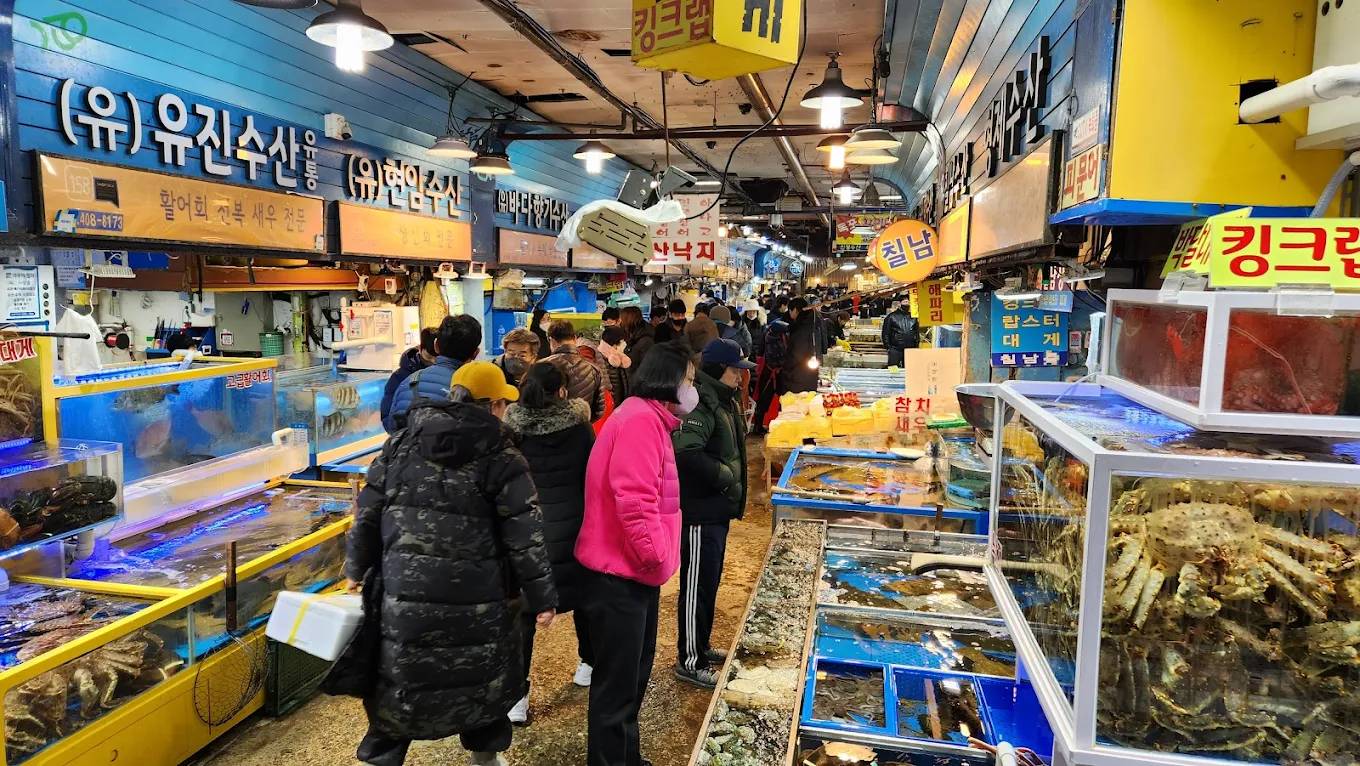
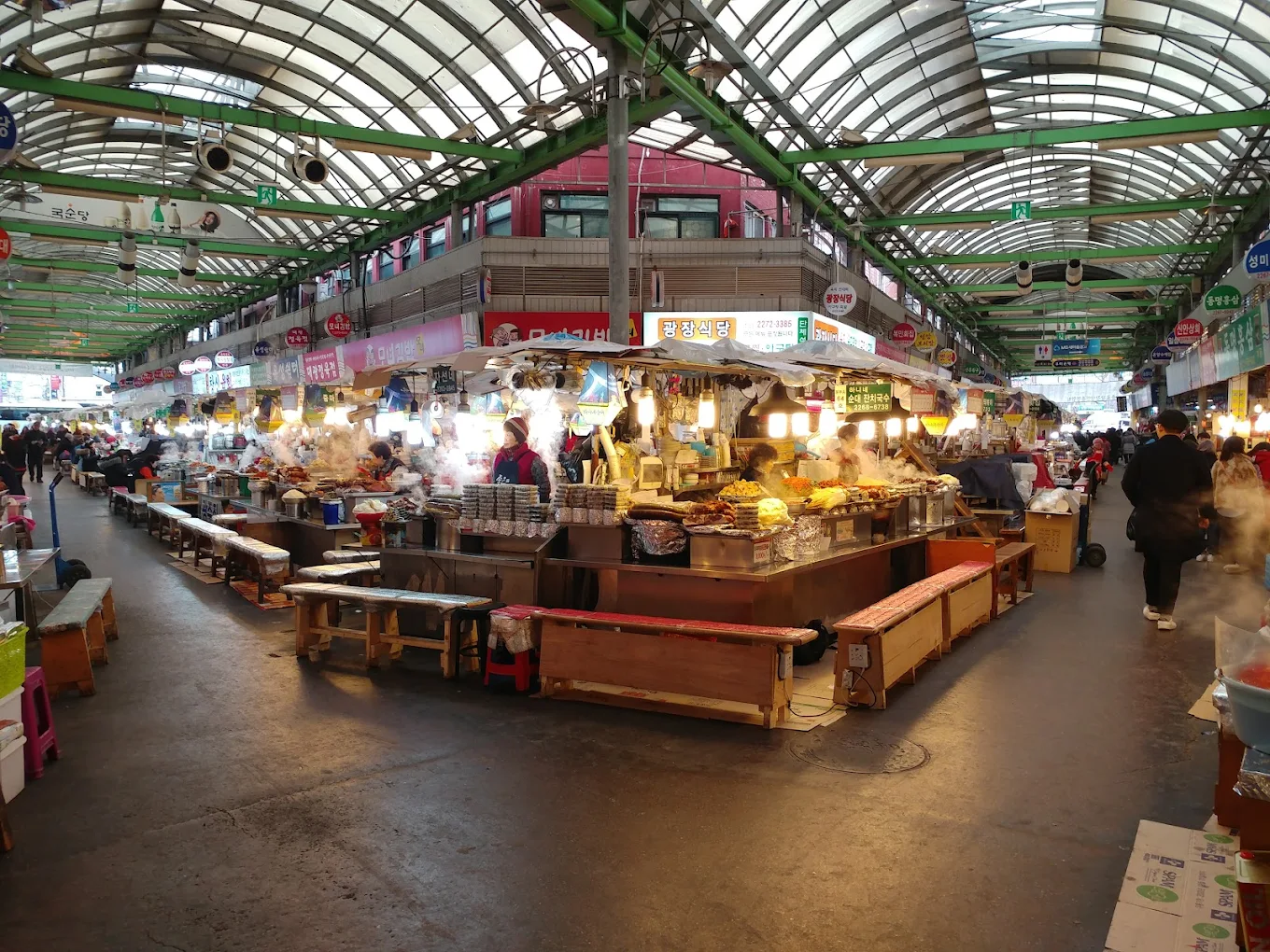
If you watch one food video about Korea, it's probably set at Gwangjang Market (광장시장) — Seoul's oldest and most beloved traditional market, where rows of stalls sizzle with bindaetteok (mung-bean pancakes), mayak gimbap ("addictive" mini seaweed rolls), yukhoe (Korean beef tartare), and live octopus. Equal parts food theater and local institution, it's the single best place in Seoul to eat like a local.
This is the complete 2026 guide.
Quick Facts
- What: A historic traditional market famous for street food
- Where: Jongno-gu, central Seoul (near Cheonggyecheon Stream)
- Best for: Street food, local atmosphere, textiles & vintage upstairs
- Hours: Food stalls roughly ~09:00 AM–11:00 PM (many close late evening; varies by stall)
- Nearest station: Jongno 5-ga Station (Line 1), Exit 8 — right there
- Time to spend: 1–2 hours (a food crawl)
Why Visit
Founded over a century ago, Gwangjang is the mother of Korean street-food markets. Its central food alley is a sensory overload — grandmothers flipping pancakes, mountains of fresh-rolled gimbap, vats of bubbling soup — and the energy is half the experience. It's also where you'll find iconic dishes done exceptionally well, often at communal stools where you'll rub elbows with locals. Steps from Cheonggyecheon Stream and the palaces, it's an essential Seoul food stop.
How to Get There
- Take Line 1 to Jongno 5-ga Station, Exit 8 — you're at the market entrance.
- Or Line 2/5 to Euljiro 4-ga and walk a few minutes.
- It's a short walk from Cheonggyecheon Stream and Dongdaemun.
What to Eat
Bindaetteok (Mung-Bean Pancake)
The market's signature — ground mung beans fried crisp and golden, served with onion-soy dipping sauce. Watch them grind the beans fresh.
Mayak Gimbap ("Addictive" Mini Rolls)
Tiny seaweed rice rolls served with a mustard-soy dip — so moreish they're nicknamed "drug" (mayak) gimbap. A must.
Yukhoe (Korean Beef Tartare)
Gwangjang's Yukhoe Alley serves fresh, seasoned raw beef topped with egg yolk and Korean pear — silky and delicious.
Other Must-Tries
- Tteokbokki & sundae (spicy rice cakes and blood sausage)
- Kalguksu & janchi guksu (noodle soups)
- Bibimbap mixed fresh at the stall
- Live octopus (sannakji) for the adventurous
- Jeon (savory pancakes) and mandu
- Hotteok and traditional sweets for dessert
When to Visit
- Lunch to early evening: Liveliest and freshest.
- Late morning: Beat the lunch rush at popular stalls.
- Weekdays: Less crowded than weekends.
- Evenings: Atmospheric, with makgeolli (rice wine) and jeon — though some stalls wind down later.
A Suggested Plan
11:30 AM — Jongno 5-ga Station, Exit 8; start with bindaetteok. 12:00 PM — Mayak gimbap and tteokbokki. 12:30 PM — Yukhoe in the beef-tartare alley. 1:15 PM — Hotteok or sweets for dessert. 1:45 PM — Walk to Cheonggyecheon Stream, then Dongdaemun (DDP).
What to Combine With
- Cheonggyecheon Stream — peaceful walking stream nearby.
- Dongdaemun (DDP & markets) — design plaza and night shopping, a short walk.
- Insadong & Jongmyo Shrine — culture stops to the west.
- Bukchon Hanok Village & Gyeongbokgung — a short ride for a palace day.
- Euljiro (Hip-jiro) — trendy retro bars and cafés nearby.
Tips From Repeat Visitors
- Come hungry and share — graze small portions across multiple stalls.
- Don't miss bindaetteok, mayak gimbap, and yukhoe — the holy trinity.
- Bring cash — most stalls are cash-only or cash-preferred.
- Go off-peak (late morning/mid-afternoon) to skip the worst lines.
- Sit at the communal counters for the full experience.
- Explore upstairs for vintage clothing and textiles.
Gwangjang vs Namdaemun (Markets)
| Gwangjang Market | Namdaemun Market | |
|---|---|---|
| Known for | Iconic street food | Huge variety of goods |
| Size | Compact, food-focused | Sprawling, everything |
| Best for | Eating like a local | Shopping + market meals |
| Vibe | Food theater | Bustling bazaar |
For pure food, Gwangjang wins; for all-purpose market shopping, choose Namdaemun.
Frequently Asked Questions
What is Gwangjang Market famous for? Street food — especially bindaetteok (mung-bean pancakes), mayak gimbap, and yukhoe (beef tartare).
Where is it? In central Seoul near Cheonggyecheon; Jongno 5-ga Station (Line 1), Exit 8.
What should I eat first? Start with bindaetteok and mayak gimbap, then yukhoe in the beef-tartare alley.
What are the hours? Roughly 9 AM–11 PM, though individual stalls vary and many wind down in the late evening.
Do I need cash? Yes — most stalls are cash-first.
Is it good for vegetarians? There are options (bindaetteok, some gimbap, jeon, noodles), but many dishes contain meat or seafood — ask at the stall.
Final Thoughts
Gwangjang Market is Seoul street food at its most authentic and electric — crispy bindaetteok, addictive mayak gimbap, and silky yukhoe served amid a century of bustling history. Come hungry, bring cash, graze your way through the alley, and you'll understand why this is every food-lover's favorite stop in Seoul.